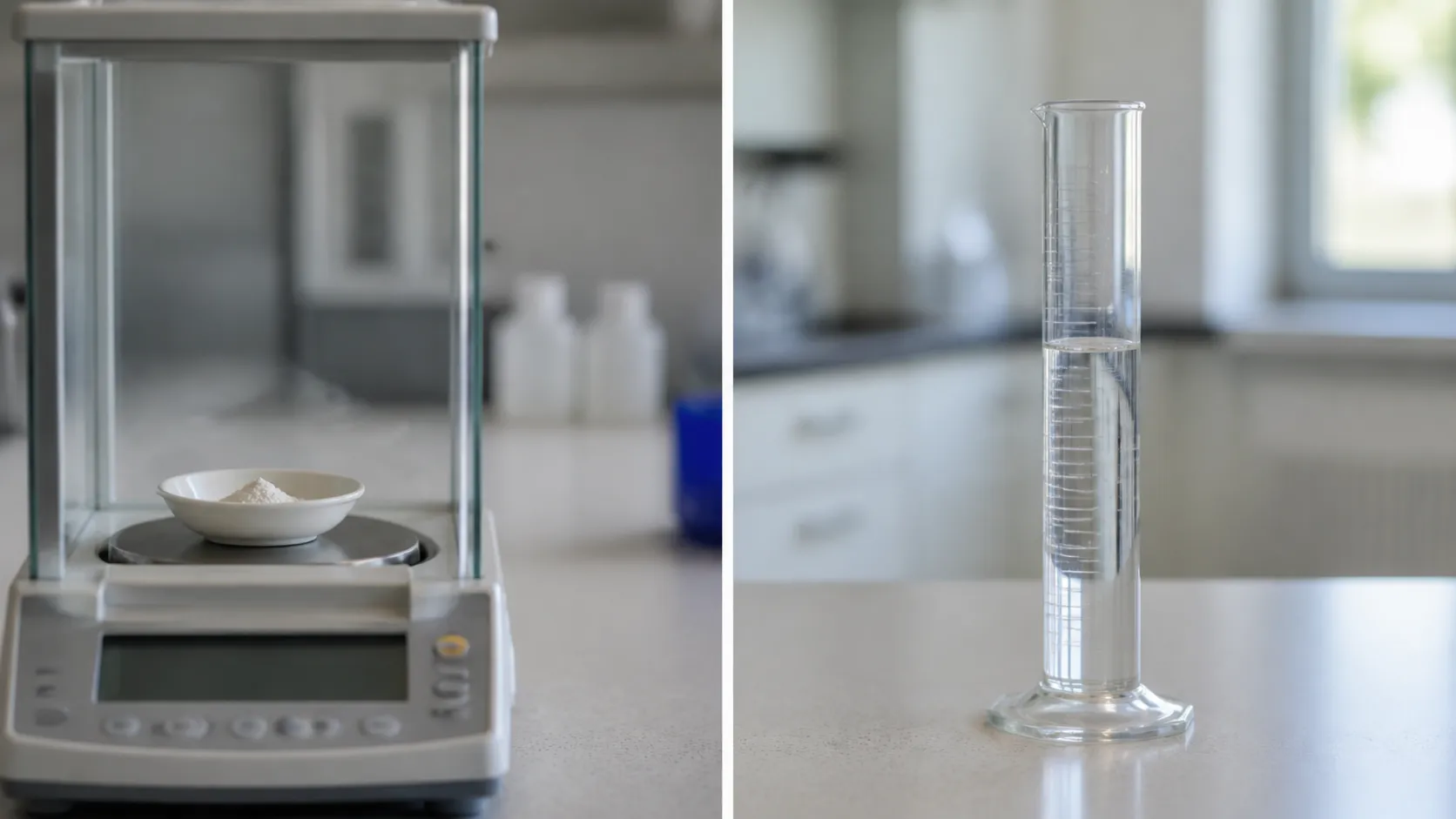
What Is mg? Milligram Meaning, Uses, and Conversions
Learn what mg means, how a milligram compares with grams and micrograms, and how to interpret milligrams on medicine, supplement, food, and laboratory labels.
If you are asking what is mg, it is the standard symbol for a milligram, a metric unit used to measure mass. One milligram equals one-thousandth of a gram, 1,000 micrograms, or one-millionth of a kilogram.
Milligrams are useful for quantities that would be inconvenient to express in grams. Medicine labels use mg for active ingredients, supplement facts use it for nutrients, and laboratories use it for small samples. The symbol may look simple, but its capitalization and context matter. Lowercase mg means milligram, while Mg and MG can have other meanings. A milligram should also not be confused with a milliliter, which measures volume. Understanding these distinctions makes labels, conversions, and scientific measurements much easier to interpret.
Quick Definition
A milligram is a metric unit of mass equal to:
- 0.001 gram
- 1,000 micrograms
- 0.000001 kilogram
- 10⁻³ gram
- 10⁻⁶ kilogram
The correct unit symbol is mg, written in lowercase without a period. The symbol remains mg whether the quantity is 1 mg or 500 mg.
What Is mg in the Metric System?
The mg unit belongs to the metric system and is accepted for use within the International System of Units, commonly called SI. Its name combines the prefix milli- with gram.
The prefix “milli” means one-thousandth. Applying it to a gram gives:
1 mg = 1/1,000 g
In decimal notation:
1 mg = 0.001 g
In scientific notation:
1 mg = 10⁻³ g
The SI base unit for mass is the kilogram, not the gram. However, metric prefixes for smaller and larger gram-based units are conventionally attached to “gram.” As a result, milligram is written as mg rather than using two prefixes with kilogram.
Relative to a kilogram:
1 mg = 0.000001 kg = 10⁻⁶ kg
This means one kilogram contains one million milligrams.
How Small Is One Milligram?
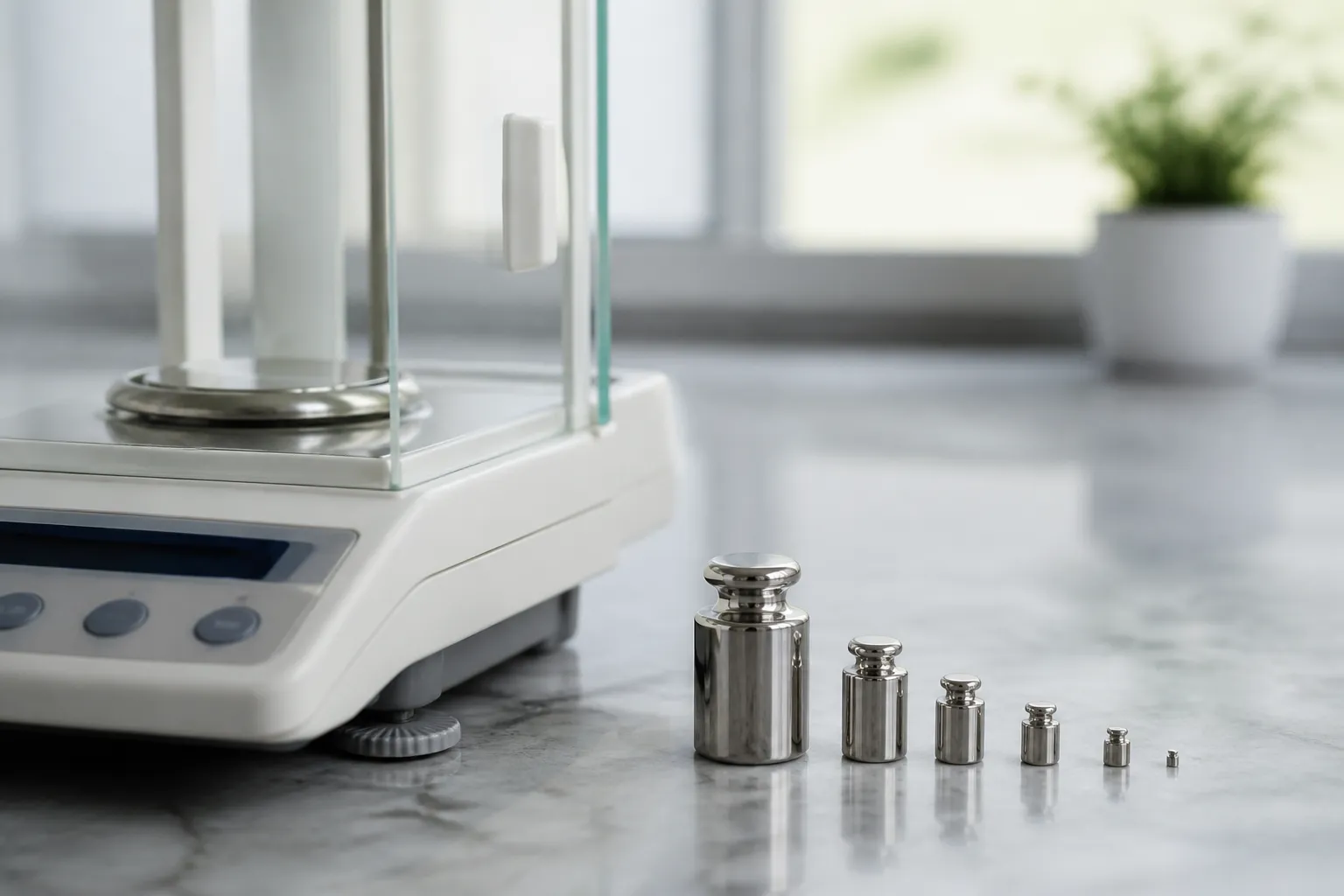
A milligram represents a very small mass. Expressing it as 0.001 g shows its size mathematically, but the unit becomes more meaningful when compared with nearby metric measurements.
| Unit | Symbol | Relationship |
|---|---|---|
| Microgram | mcg or µg | 1,000 mcg = 1 mg |
| Milligram | mg | 1,000 mg = 1 g |
| Gram | g | 1,000 g = 1 kg |
| Kilogram | kg | 1 kg = 1,000,000 mg |
Milligrams are appropriate when grams would produce awkward decimal values. A quantity of 0.2 g, for example, is often easier to read as 200 mg. Both values describe the same mass.
The unit is small enough for measuring active ingredients, vitamins, mineral content, laboratory chemicals, and tiny product components. It is not usually practical for measuring larger everyday objects. A bag of groceries is better expressed in kilograms, while a small amount of a nutrient may be better expressed in milligrams.
Is mg Mass or Weight?
Technically, mg measures mass, which is the amount of matter in an object or sample. People often call it a measure of weight in everyday speech, but mass and weight are not identical scientific concepts.
Mass remains constant when gravity changes. Weight is the force exerted on that mass by gravity. An object taken from Earth to the Moon keeps the same mass but has less weight because the Moon’s gravitational pull is weaker.
For routine labels, recipes, and medication discussions on Earth, “weight” is commonly understood. In scientific or technical writing, however, “unit of mass” is more accurate.
Why Milligrams Are Used
The milligram unit allows small quantities to be written without long strings of decimal places. It is widely used wherever small differences matter.
Medicine
Tablets, capsules, and some liquid medicines list active ingredients in mg. The number may describe the amount per tablet, per capsule, per measured volume, or per dose, depending on the label.
Supplements and nutrition
Supplement facts panels often list vitamins and minerals in milligrams. Nutrition labels may use mg for sodium, cholesterol, calcium, iron, or other nutrients. Smaller quantities may be shown in micrograms.
Laboratories
Laboratory technicians use milligrams for chemical samples, test materials, and analytical measurements. A suitable precision balance may be required when small changes in mass affect a result.
Manufacturing
Manufacturers may specify pigments, additives, coatings, pharmaceutical ingredients, or contaminants in milligrams. The required measurement precision depends on the product and process.
Environmental testing
Small concentrations of substances in water, soil, or air may involve milligram-based measurements. In these cases, mg is often combined with another unit, such as mg/L, to describe a concentration rather than a standalone mass.
What Does mg Mean on Medicine Labels?
The mg meaning on a medication label is usually the mass of a named active ingredient. The surrounding wording tells you whether that amount applies to one tablet, one capsule, a measured liquid volume, or another dosage form.
A tablet labeled 200 mg contains 200 mg of the named ingredient per tablet if that is how its strength is defined. The complete tablet may weigh more because it can also contain coatings, fillers, binders, coloring, or other inactive ingredients.
Similarly, a capsule marked 100 mg may contain 100 mg of the stated active ingredient, but the capsule shell and additional ingredients contribute to the product’s total mass.
What does 500 mg mean on medicine?
A “500 mg” label usually means the stated dosage form contains 500 mg of a named ingredient. Since 1,000 mg equals 1 g:
500 mg ÷ 1,000 = 0.5 g
The number alone does not show whether a medicine is appropriate, unusually strong, or safe for a particular person. That depends on the active ingredient, formulation, instructions, route, medical condition, and other factors.
A higher mg number is not automatically better or stronger
Milligram values should not be used to compare unrelated medicines. Ten milligrams of one active ingredient cannot be judged against 100 mg of another simply by looking at the numbers.
Different substances work at different quantities. Release pattern, absorption, formulation, intended use, and route of administration may also change how a product acts. Follow the prescription or product directions rather than assuming that more mg means greater effectiveness.
What Does mg Mean on a Supplement Label?
On a supplement facts panel, mg usually states how much of a named nutrient or ingredient appears in one serving. The serving may consist of one tablet, two capsules, a scoop, or a specified liquid volume.
For example, if a label lists a mineral as 150 mg per serving, the full serving contains 150 mg of that named mineral or compound as defined by the label. It does not necessarily mean the entire tablet or powder serving weighs 150 mg.
Check three parts of the panel:
- Serving size: the amount of product represented by the listed values.
- Ingredient name: the nutrient or substance being measured.
- Amount per serving: the mass of that ingredient, commonly shown in mg or mcg.
Do not assume that two supplements with the same front-label mg claim provide identical forms, serving sizes, or compositions. The complete supplement facts and usage directions provide the necessary context.
Understanding mg on Liquid Labels
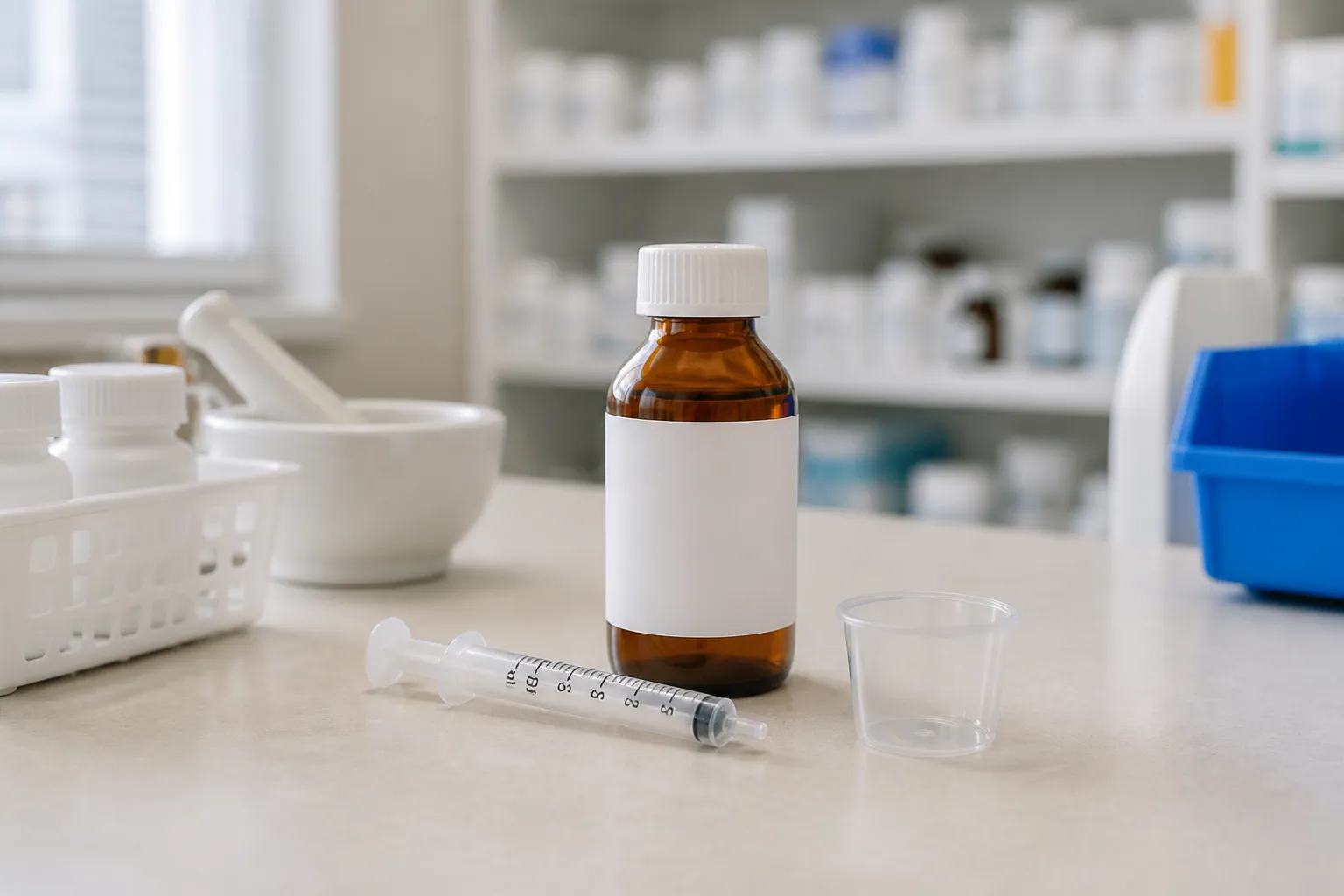
Liquid medicines may show both mg and mL because the two units answer different questions:
- mg states the mass of the active ingredient.
- mL states the volume of liquid.
- mg/mL states concentration—the ingredient mass in each milliliter.
A label reading 100 mg/5 mL means that every 5 mL contains 100 mg of the named ingredient. It does not mean 100 mg equals 5 mL for all substances or products.
The concentration is:
100 mg ÷ 5 mL = 20 mg/mL
Another formulation of the same type of product could have a different concentration. That would change the volume containing a given number of milligrams.
The density of water should not be used to interpret medication concentration. For liquid medicine, use the exact strength printed on the current label and follow professional or product instructions.
Essential Milligram Conversions
Milligram conversions are based on powers of 1,000.
Milligrams to grams
Divide milligrams by 1,000:
Grams = Milligrams ÷ 1,000
Example:
500 mg ÷ 1,000 = 0.5 g
Another example:
250 mg ÷ 1,000 = 0.25 g
Grams to milligrams
Multiply grams by 1,000:
Milligrams = Grams × 1,000
Example:
2.5 g × 1,000 = 2,500 mg
Milligrams to micrograms
Multiply milligrams by 1,000:
Micrograms = Milligrams × 1,000
Example:
1.5 mg × 1,000 = 1,500 mcg
Micrograms to milligrams
Divide micrograms by 1,000:
Milligrams = Micrograms ÷ 1,000
Example:
750 mcg ÷ 1,000 = 0.75 mg
The following table summarizes what one milligram equals:
| Measurement | Equivalent to 1 mg |
|---|---|
| Grams | 0.001 g |
| Kilograms | 0.000001 kg |
| Micrograms | 1,000 mcg |
| Milliliters | No fixed equivalent without density or concentration |
mg vs mcg: A Thousandfold Difference
A microgram is much smaller than a milligram:
1 mg = 1,000 mcg
Therefore, 1 mg is one thousand times as much mass as 1 mcg. Confusing these units can create a thousandfold error.
The symbol for microgram is µg, using the Greek letter mu. In medical contexts, mcg is also widely used because it is easier to type and may reduce confusion between µg and mg.
Always confirm the unit before converting or measuring. A value written in mcg must not be treated as the same number of mg.
mg vs g: Which Is Larger?
A gram is larger than a milligram:
1 g = 1,000 mg
To move from grams to milligrams, multiply by 1,000. To move from milligrams to grams, divide by 1,000.
For example:
- 0.1 g = 100 mg
- 0.5 g = 500 mg
- 1 g = 1,000 mg
- 2 g = 2,000 mg
Using the unit that produces an easy-to-read value helps reduce unnecessary decimal handling.
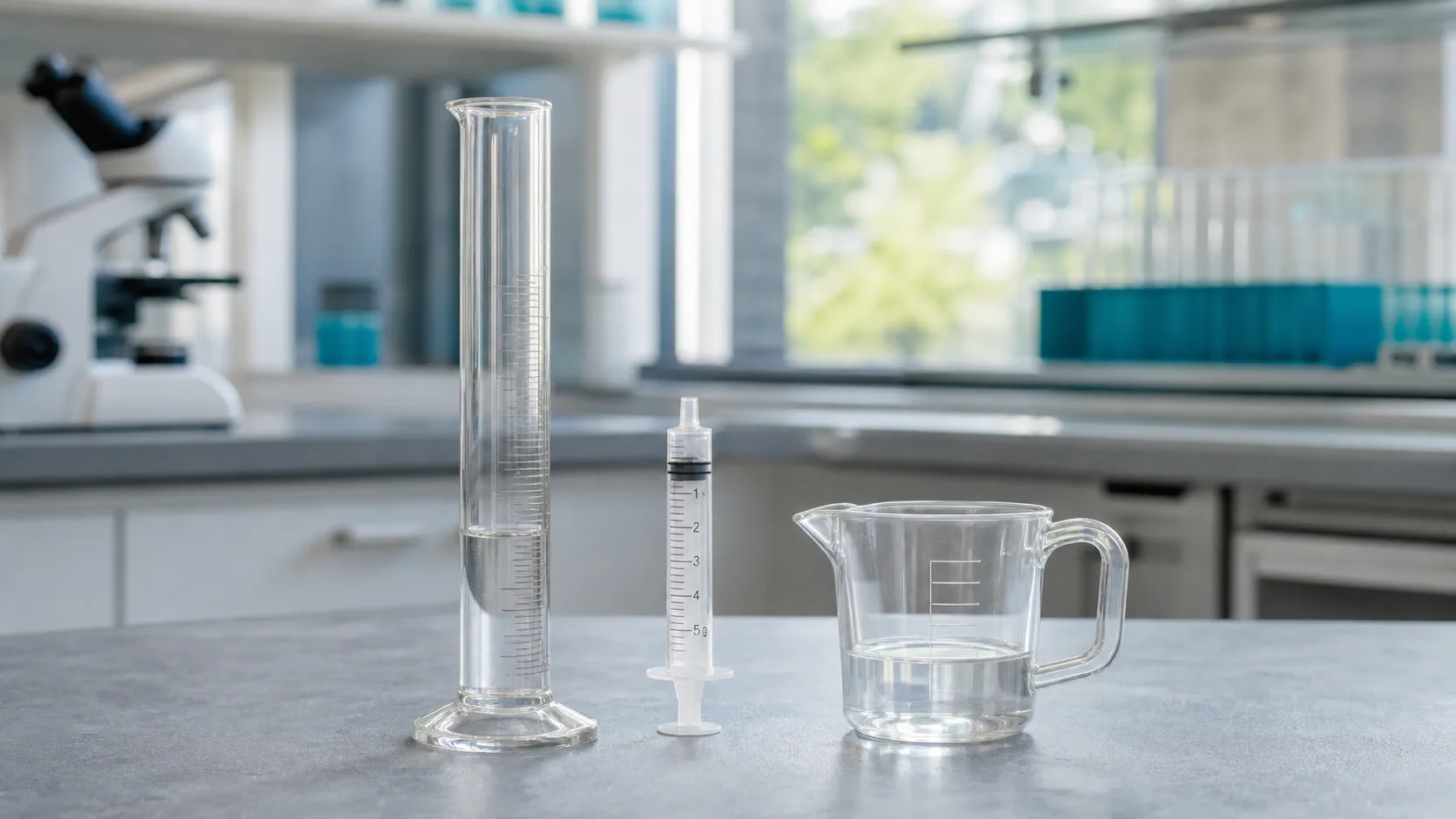
mg vs mL: Mass Is Not Volume
Milligrams and milliliters cannot be compared or converted directly because they measure different properties:
- mg measures mass.
- mL measures volume.
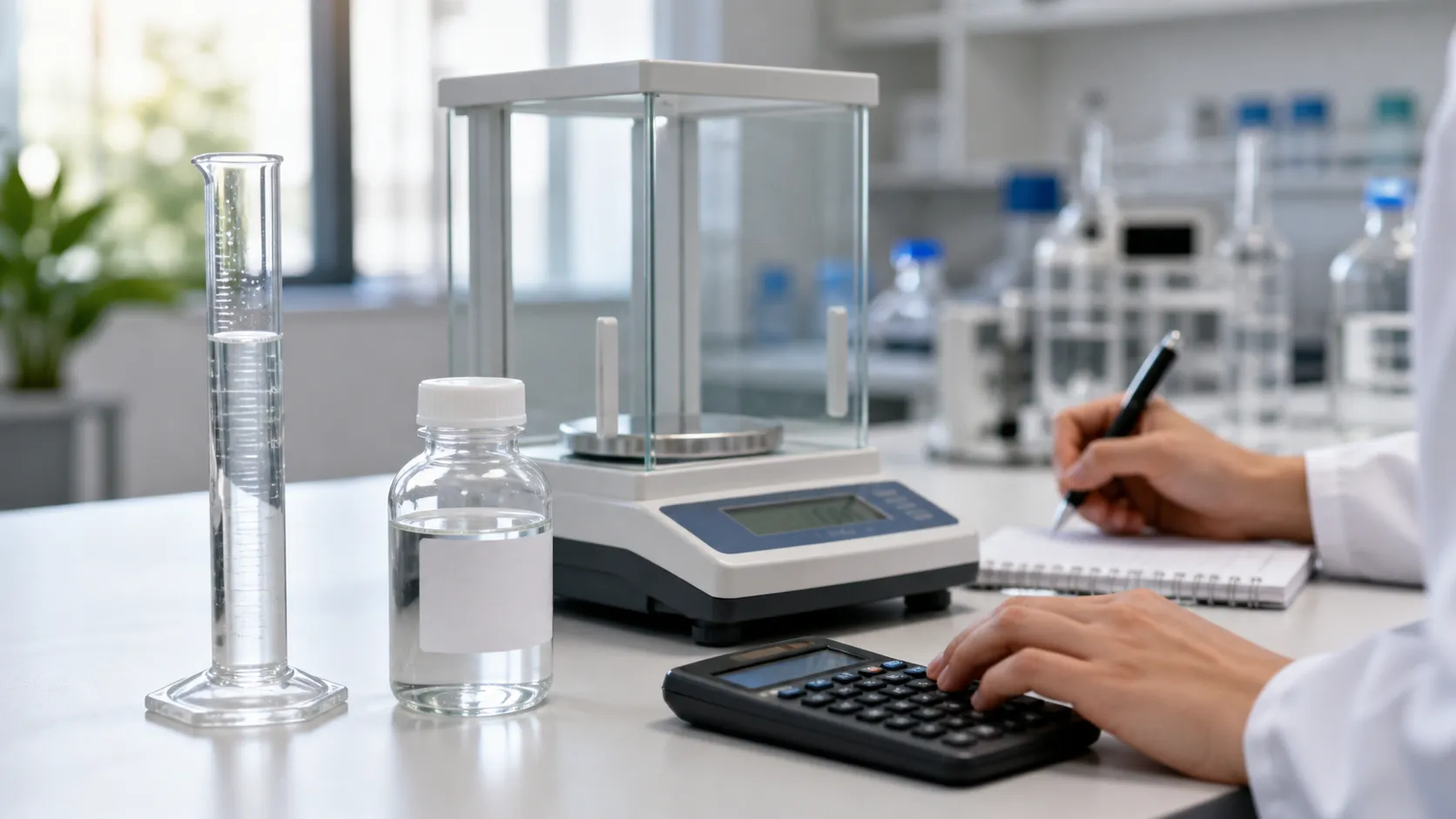
To convert the total mass of a material into volume, you need its density. To determine what liquid volume contains a stated ingredient mass, you need the solution’s concentration.
For example, 1 mL of water has a total mass of approximately 1,000 mg under ordinary conditions. That water-based relationship does not apply automatically to oils, syrups, powders, or medication ingredients.
A fixed mg-to-mL answer without density or concentration is incomplete.
The Capitalization of mg Matters
Unit symbols and chemical symbols are case-sensitive. Changing the capitalization can change the meaning entirely.
| Symbol | Possible meaning |
|---|---|
| mg | Milligram |
| Mg | Magnesium, the chemical element |
| Mg | Megagram in an SI mass-unit context |
| MG | Myasthenia gravis in some medical writing |
For a milligram, always use lowercase mg. Do not write Mg, MG, mG, or M.G. when you mean milligram.
Standard unit notation does not require a period after mg unless the symbol happens to appear at the end of a sentence. The symbol also does not take a plural “s.” Write 1 mg and 50 mg, not “50 mgs.”
The word can be pluralized normally: one milligram, two milligrams. British English may also use the spelling “milligramme,” although the symbol remains mg.
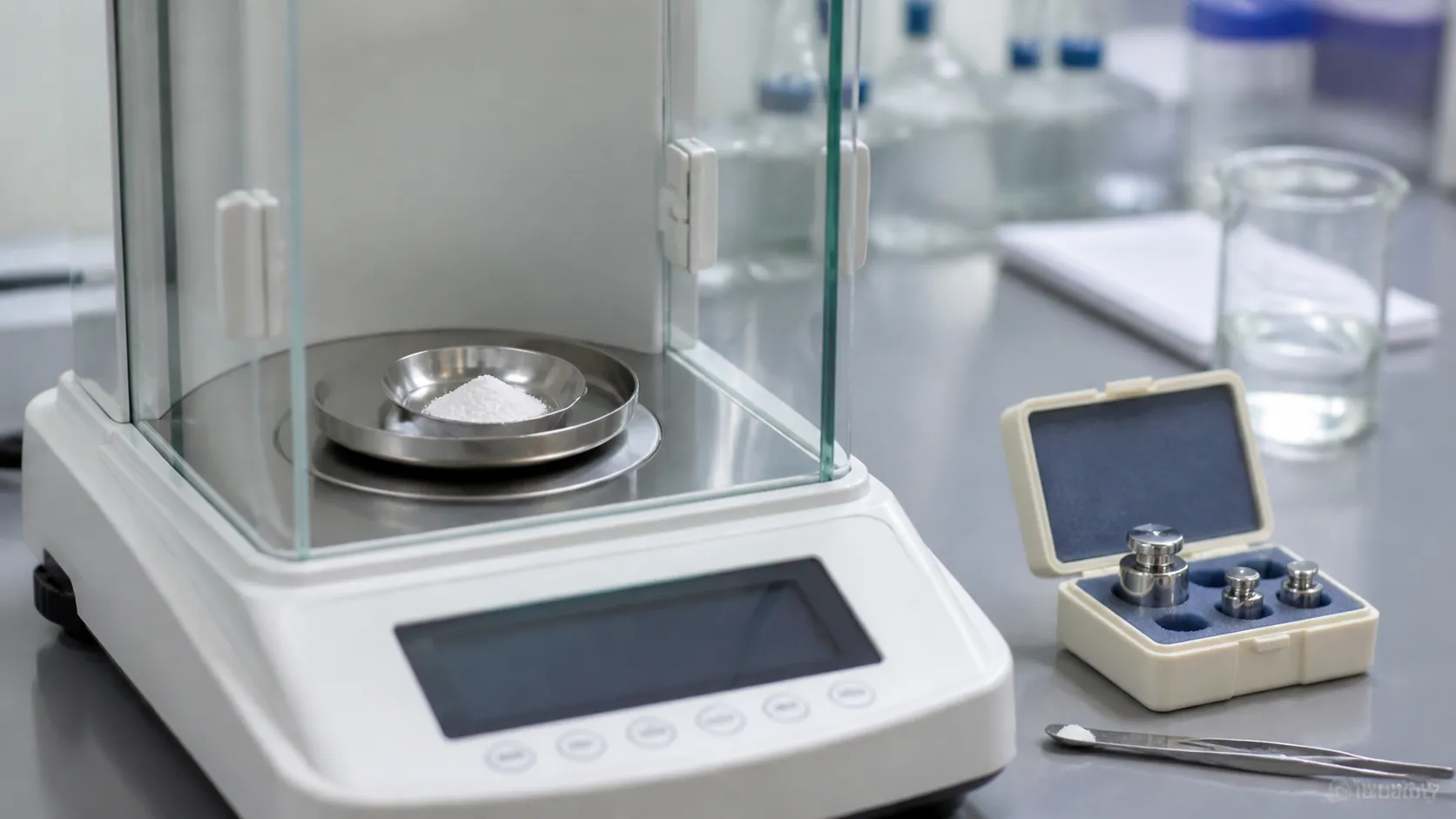
How Milligram Quantities Are Measured
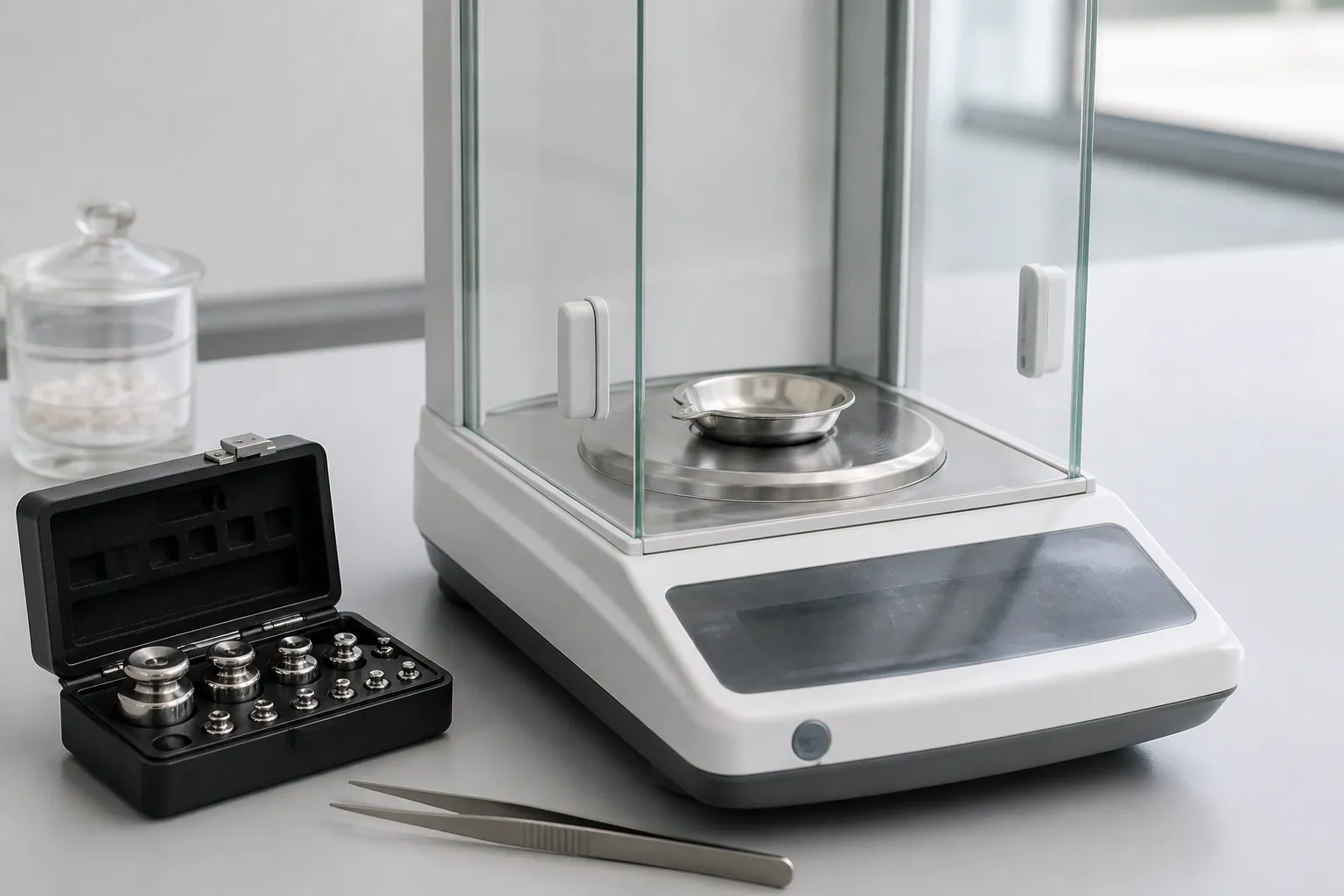
Single-milligram quantities require equipment designed for very small masses. An ordinary kitchen scale usually measures in whole grams or tenths of a gram and cannot reliably measure 1 mg.
Laboratories may use:
- precision balances;
- analytical balances;
- calibrated weighing containers;
- controlled working conditions;
- documented calibration and verification procedures.
Air currents, vibration, static charge, moisture, and handling can influence very small measurements. The number of decimal places shown on a scale does not by itself prove that the result is accurate.
For medicine, do not open, divide, crush, or weigh a dosage form unless the product instructions or a qualified professional specifically permits it. A tablet’s total weight is not necessarily equal to its stated active-ingredient mass.
Common Mistakes With mg
Assuming mg is a volume unit
Milligrams measure mass. Liquid volume is commonly measured in mL.
Treating the listed mg as total product weight
A label may state only the active ingredient or a particular nutrient. Inactive ingredients can add more mass.
Comparing unrelated medicines by the number alone
A larger mg value does not establish greater potency, effectiveness, or suitability.
Confusing mg with mcg
One milligram equals 1,000 micrograms. Missing this difference can change a calculation dramatically.
Writing the symbol with incorrect capitalization
Lowercase mg means milligram. Mg and MG may have entirely different meanings.
Using an unsuitable scale
A kitchen scale is generally not designed to measure single milligrams accurately. Small-mass work requires appropriate calibrated equipment.
Frequently Asked Questions
What does mg stand for?
In measurement, mg stands for milligram. A milligram is a metric unit of mass equal to one-thousandth of a gram. The symbol is written in lowercase without a plural “s.”
How many milligrams are in one gram?
One gram contains 1,000 milligrams. Multiply grams by 1,000 to obtain milligrams. Divide milligrams by 1,000 to convert them back into grams.
How many mcg are in 1 mg?
One milligram equals 1,000 micrograms. The microgram may be written as µg or mcg. Because these units differ by a factor of 1,000, the symbol should always be checked carefully.
What does 500 mg mean on a medicine label?
It usually means the specified tablet, capsule, serving, or other dosage form contains 500 mg of the named active ingredient. The complete product may weigh more, and the number alone does not determine whether the medicine is appropriate for someone.
Does more mg mean a larger tablet?
Not necessarily. Tablet size also depends on formulation, inactive ingredients, shape, coating, and manufacturing design. A physically larger tablet can contain less active ingredient than a smaller tablet.
Is mg the same as mL?
No. mg measures mass, while mL measures volume. Converting between them requires density for a total substance or concentration for an ingredient in solution.
Should mg be uppercase or lowercase?
Milligram is written as lowercase mg. Mg can mean magnesium or, in an SI unit context, megagram. MG may represent myasthenia gravis in medical writing, so capitalization should not be changed casually.
Can a kitchen scale measure milligrams?
Most household kitchen scales cannot measure single-milligram quantities reliably. Small masses generally require a suitable precision or analytical balance. The scale’s resolution, calibration, accuracy, and environmental conditions all affect the result.
Reading mg With the Right Context
The answer to what is mg begins with a simple definition: it is the symbol for milligram, a unit of mass equal to one-thousandth of a gram. Its meaning on a particular label depends on what the number describes—an active ingredient, nutrient, laboratory sample, or complete material.
Read the unit carefully, preserve its lowercase spelling, and check whether the amount applies per tablet, capsule, serving, or liquid volume. For medication, follow the current label, prescription, and pharmacist’s instructions rather than comparing products by their mg numbers alone.
Convert mg and mL with the value that actually matters.
Use the calculator with your substance density or the exact concentration shown on the product label.

Misbah Shafique
Misbah Shafique creates clear, carefully researched guides about mass, volume, density, concentration, and everyday measurement conversions.