How Do I Convert mL to mg? Two Reliable Calculation Methods
Convert mL to mg with the right method: use density for a whole substance or concentration for an ingredient in solution, then check the units and label strength.
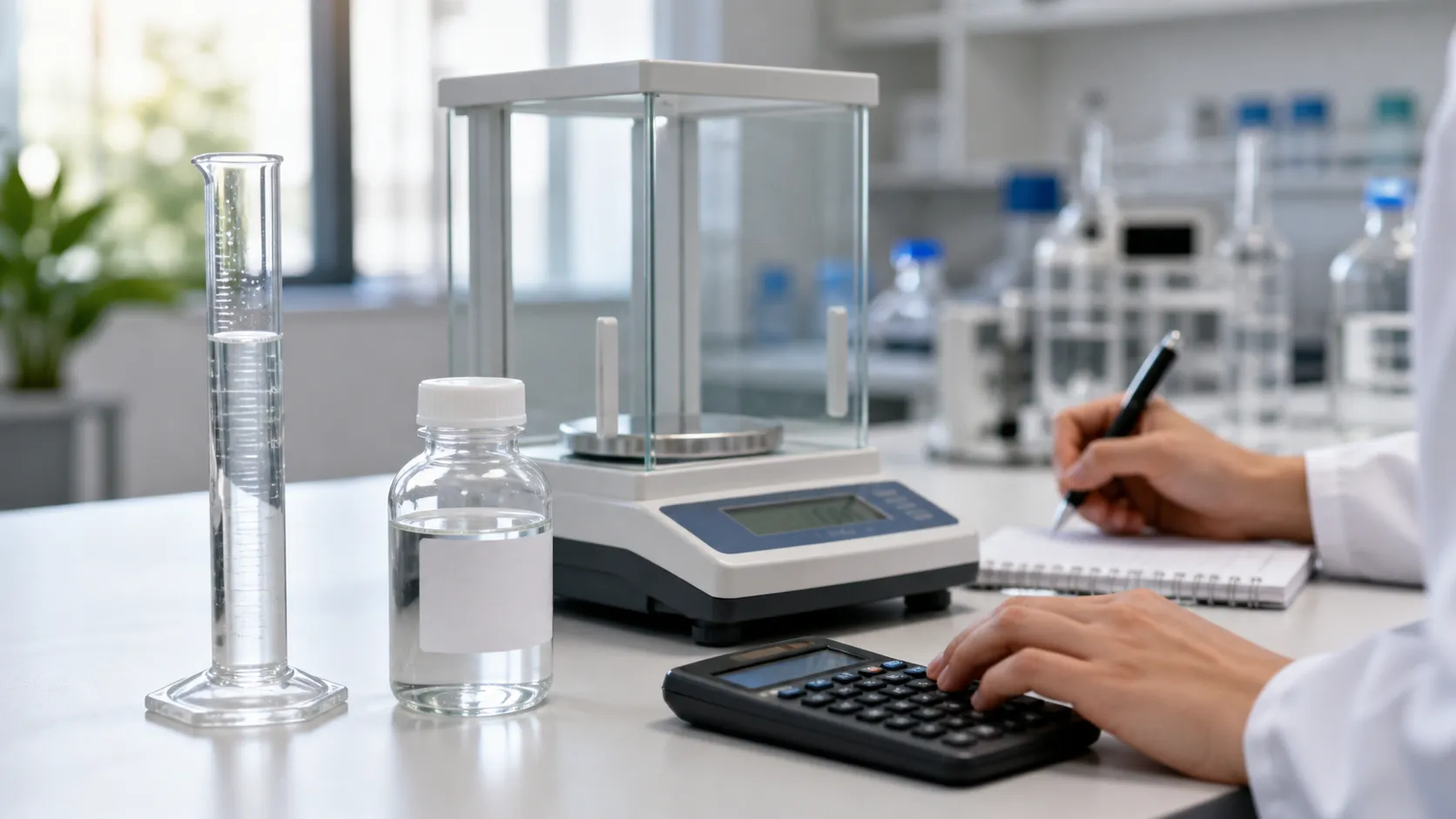
If you are asking, “how do I convert mL to mg?”, you need one additional value before calculating the answer. Milliliters measure volume, while milligrams measure mass. Because they describe different physical quantities, there is no universal conversion between them.
For a pure liquid or ingredient, the missing value is its density. If the density is expressed in grams per milliliter, multiply the volume by the density and then by 1,000. For a medicine or other solution, use its concentration in milligrams per milliliter instead. Multiply the measured volume by that concentration to find the amount of active ingredient.
This distinction matters. One milliliter of water has a total mass of approximately 1,000 mg, but one milliliter of medicine does not necessarily contain 1,000 mg of active drug. Its label might state 5 mg/mL, 50 mg/mL, or another strength entirely.
The Short Calculation
Use the formula that matches what you are measuring.
For a pure substance with density in g/mL:
Mass (mg) = Volume (mL) × Density (g/mL) × 1,000
For density already given in mg/mL:
Mass (mg) = Volume (mL) × Density (mg/mL)
For a medicine or solution:
Active ingredient (mg) = Volume (mL) × Concentration (mg/mL)
You cannot produce a reliable answer from the mL value alone. You must know either the material’s density or the solution’s concentration.
Why mL and mg Are Not Directly Interchangeable
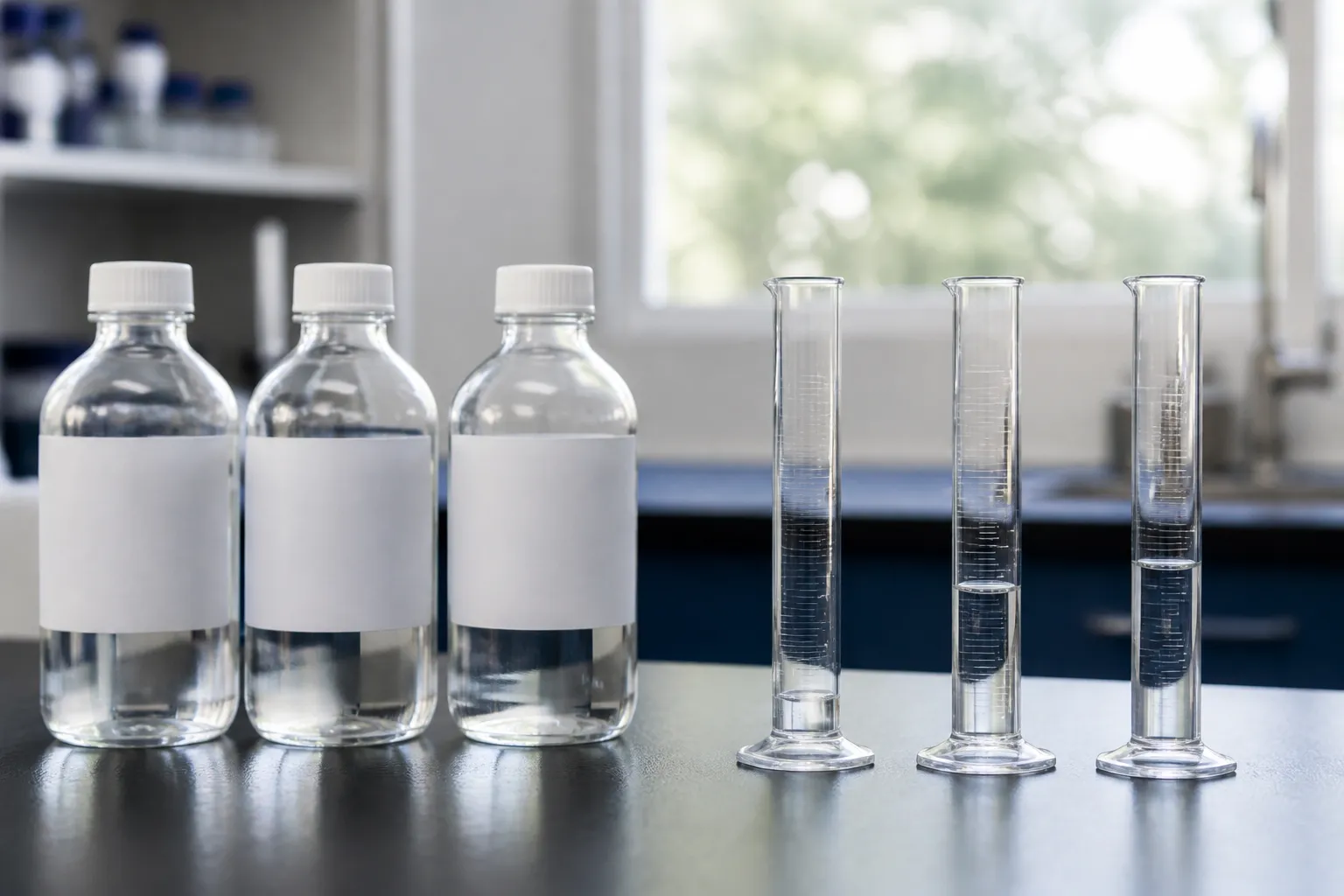
A milliliter is a unit of volume. It tells you how much space a liquid or material occupies.
A milligram is a unit of mass. It tells you how much matter is present. People often call this “weight” in everyday conversation, although mass is the more precise scientific term.
Two substances can occupy the same volume while having different masses. One milliliter of a light oil does not have the same mass as one milliliter of water. One milliliter of a thick syrup may have a greater mass than both.
Density creates the relationship between volume and mass:
Density = Mass ÷ Volume
Rearrange that equation to calculate mass:
Mass = Volume × Density
Medication introduces a related but different idea: concentration. Density describes the mass of the whole material per unit of volume. Medication concentration describes how much active ingredient is present within each unit of the liquid.
Confusing those concepts can produce a mathematically neat but practically incorrect result.
Two Ways to Answer “How Do I Convert mL to mg?”
The correct method depends on whether you want the mass of an entire substance or the amount of one component dissolved in a solution.
Method 1: Use density for a pure liquid or ingredient
Use density when calculating the total mass of water, oil, milk, laboratory material, or another substance.
If density is listed in g/mL, apply:
Mass (mg) = Volume (mL) × Density (g/mL) × 1,000
The final multiplication by 1,000 changes grams into milligrams.
Worked example
Suppose you have 5 mL of a liquid with a density of 0.8 g/mL:
5 mL × 0.8 g/mL = 4 g
Convert grams to milligrams:
4 g × 1,000 = 4,000 mg
Therefore, 5 mL of that liquid has a mass of 4,000 mg.
The unit cancellation confirms the calculation:
mL × g/mL = g
The mL units cancel, leaving grams. Multiplying by 1,000 then produces milligrams.
Method 2: Use concentration for a medicine or solution
Use concentration when calculating the amount of an active ingredient dissolved in a liquid.
If the label states the strength in mg/mL, use:
Active ingredient (mg) = Volume (mL) × Concentration (mg/mL)
Worked example
A solution contains 50 mg of active ingredient in every milliliter. You measure 2 mL:
2 mL × 50 mg/mL = 100 mg
The 2 mL sample contains 100 mg of the active ingredient.
This result does not mean the entire liquid weighs 100 mg. It only describes the amount of the specified ingredient in that volume.
When Density Is Already Given in mg/mL
Sometimes a material’s density is already expressed in milligrams per milliliter. In that case, no grams-to-milligrams conversion is required.
Use:
Mass (mg) = Volume (mL) × Density (mg/mL)
For a density of 800 mg/mL and a volume of 5 mL:
5 mL × 800 mg/mL = 4,000 mg
This is the same result as using 0.8 g/mL because:
0.8 g/mL × 1,000 = 800 mg/mL
Before calculating, check the units beside the density value. Multiplying by 1,000 twice would produce an answer that is 1,000 times too large.
A Comparison Table With Clearly Stated Assumptions
The following values demonstrate why the substance or concentration must be identified first.
| Volume | Water at approximately 1 g/mL | Solution at 10 mg/mL | Solution at 50 mg/mL |
|---|---|---|---|
| 1 mL | About 1,000 mg total mass | 10 mg active ingredient | 50 mg active ingredient |
| 2 mL | About 2,000 mg total mass | 20 mg active ingredient | 100 mg active ingredient |
| 5 mL | About 5,000 mg total mass | 50 mg active ingredient | 250 mg active ingredient |
| 10 mL | About 10,000 mg total mass | 100 mg active ingredient | 500 mg active ingredient |
The water column shows the approximate mass of the entire water sample. The solution columns show only the mass of an active ingredient dissolved in each volume.
They are not equivalent types of measurement. The table does not imply that a 50 mg/mL solution has a total density of 50 mg/mL.
Why 1 mL Is Not Always 1,000 mg
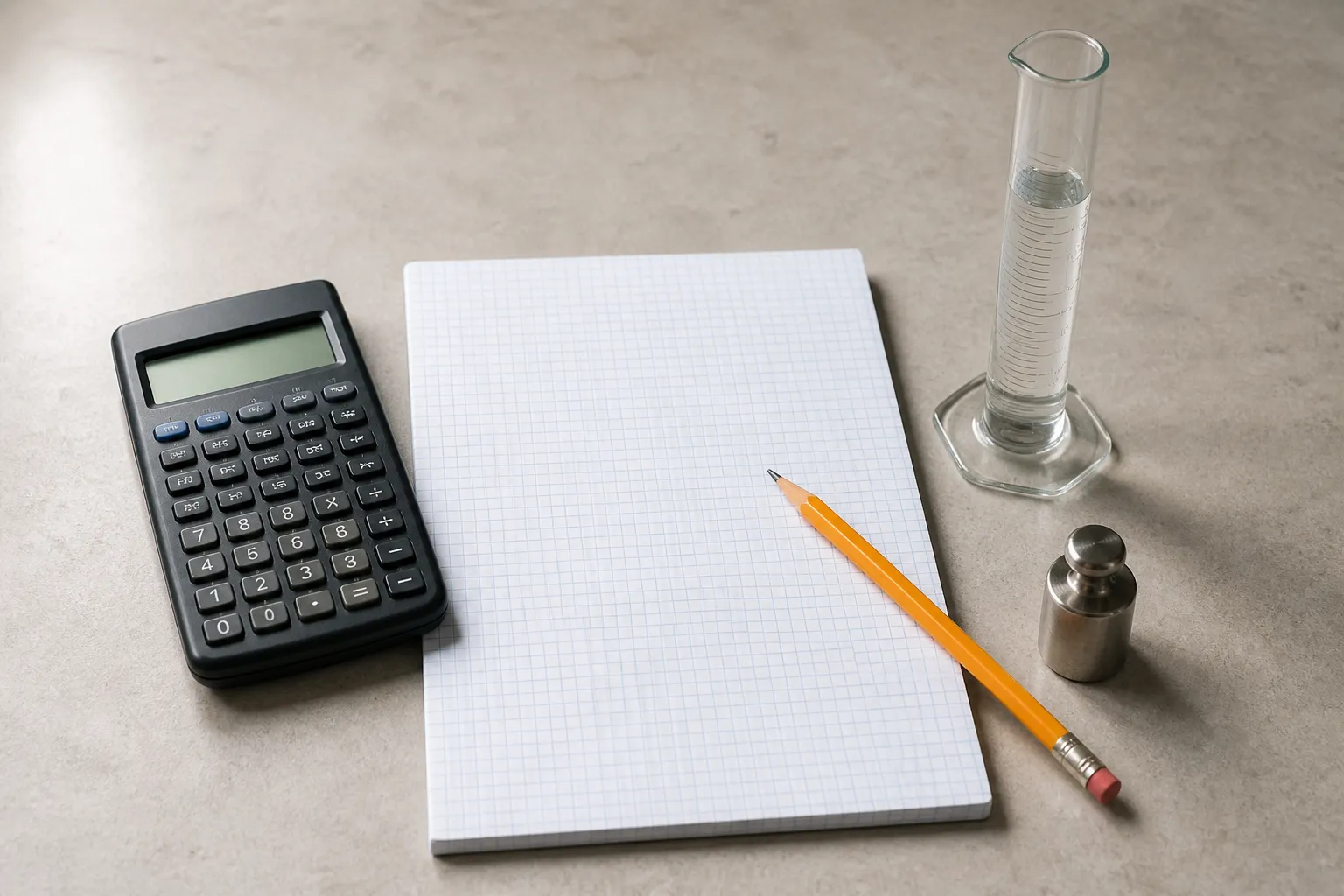
One milliliter of water has a mass close to one gram under ordinary reference conditions:
1 g = 1,000 mg
That is the source of the familiar approximation:
1 mL water ≈ 1,000 mg water
This relationship is specific to water’s approximate density of 1 g/mL. Density changes slightly with temperature, although the approximation is adequate for many ordinary educational calculations.
Other liquids have different densities. Their composition and temperature can also change the value. Therefore:
- 1 mL of cooking oil is not automatically 1,000 mg.
- 1 mL of milk is not guaranteed to equal 1,000 mg.
- 1 mL of honey is not equal to 1,000 mg.
- 1 mL of medicine does not automatically contain 1,000 mg of active drug.
Use a reliable density table, product specification, safety data sheet, or verified label for the actual material.
Reading a Medicine Label Correctly
Liquid medicines often show concentration as an amount per a stated volume, such as:
- 10 mg/mL
- 125 mg/5 mL
- 250 mg/5 mL
- 500 mg/10 mL
If the volume in the denominator is not 1 mL, calculate the concentration first:
Concentration (mg/mL) = Labeled amount (mg) ÷ Labeled volume (mL)
Example: 250 mg per 5 mL
Calculate the amount in each milliliter:
250 mg ÷ 5 mL = 50 mg/mL
A 2 mL portion therefore contains:
2 mL × 50 mg/mL = 100 mg
This means 250 mg/5 mL and 50 mg/mL represent the same concentration.
Example: 125 mg per 5 mL
Calculate the concentration:
125 mg ÷ 5 mL = 25 mg/mL
A 10 mL portion contains:
10 mL × 25 mg/mL = 250 mg
These examples demonstrate the arithmetic only. They do not recommend how much medicine anyone should take.
Do Not Use Water Density for Medication Doses
The water rule answers a different question. It estimates the total mass of water, not the quantity of drug dissolved in a medicinal liquid.
Suppose a bottle contains medicine at 10 mg/mL. One milliliter may have a total liquid mass close to 1,000 mg, depending on its ingredients and density. However, only 10 mg of that total is the stated active ingredient.
For medication calculations, use the exact concentration printed on the correct product label. Different versions of the same medicine may have different strengths.
Before measuring a dose:
- Confirm the medicine name and concentration.
- Check whether the label uses mg/mL or mg per another volume.
- Match the units in the calculation.
- Use an oral syringe or another calibrated device.
- Ask a pharmacist if the prescription, concentration, or measurement is unclear.
Do not estimate a child’s dose from age, a household spoon, or the liquid’s volume alone. The prescribed amount and actual product concentration both matter.
Converting Percentage Strength to mg/mL
Some solutions display strength as a percentage instead of mg/mL. You must know what type of percentage the label represents.
For a weight/volume percentage, or % w/v:
1% w/v = 1 g per 100 mL
Convert one gram to milligrams:
1 g = 1,000 mg
Then divide by 100 mL:
1,000 mg ÷ 100 mL = 10 mg/mL
This gives the shortcut:
Concentration in mg/mL = Percentage strength × 10
| Weight/volume strength | Equivalent concentration |
|---|---|
| 0.5% w/v | 5 mg/mL |
| 1% w/v | 10 mg/mL |
| 2% w/v | 20 mg/mL |
| 5% w/v | 50 mg/mL |
This shortcut applies only when the percentage means grams per 100 mL, or weight/volume. It should not be used automatically for volume/volume, weight/weight, or another percentage format.
A Simple mL-to-mg Calculator Method
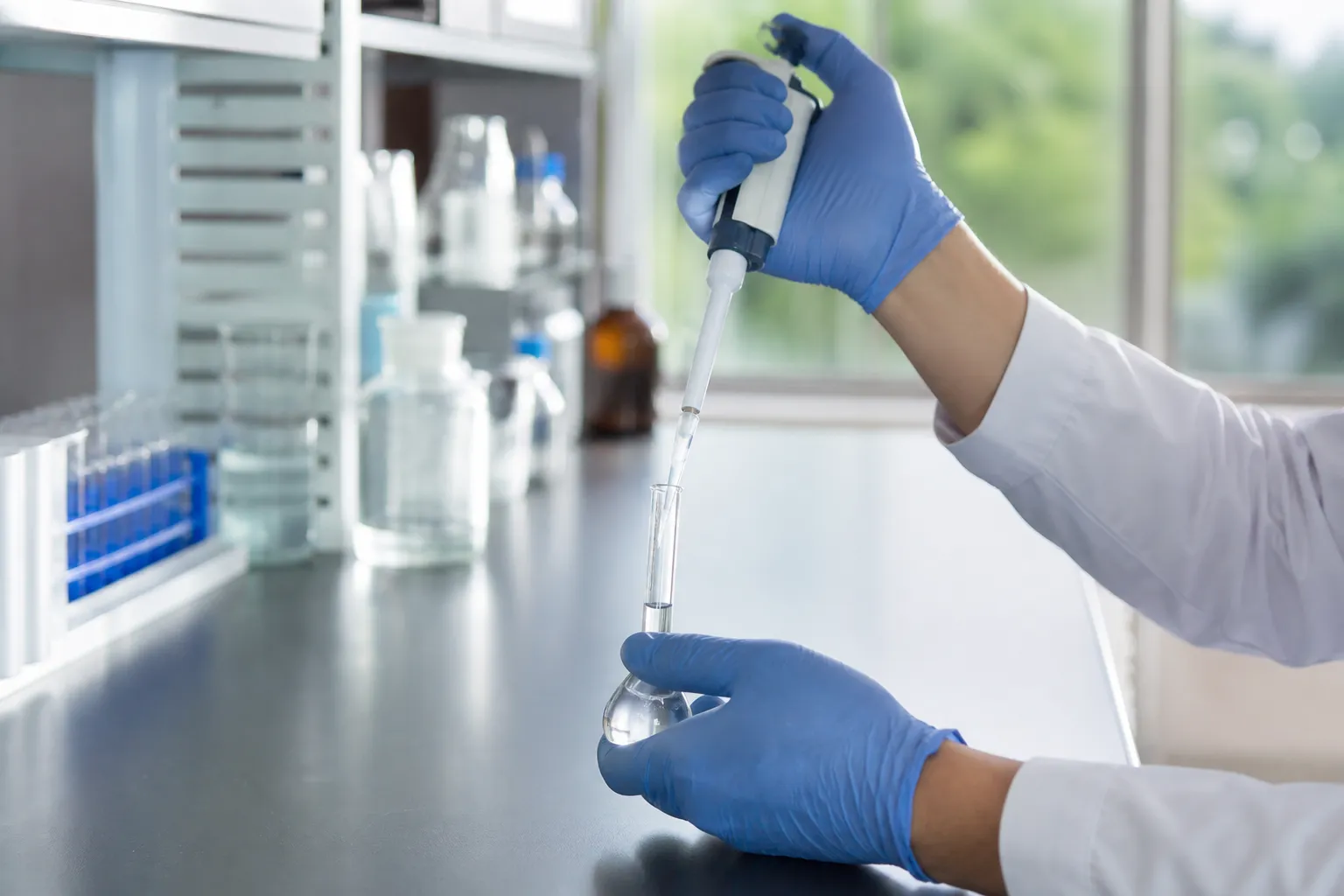
Before entering values into a calculator, answer these three questions:
- What substance or active ingredient am I measuring?
- Do I have density or concentration?
- What units are used?
Then choose the matching formula.
Density in g/mL
Enter:
Volume × Density × 1,000
For 12 mL at 1.2 g/mL:
12 × 1.2 × 1,000 = 14,400 mg
Density in mg/mL
Enter:
Volume × Density
For 12 mL at 1,200 mg/mL:
12 × 1,200 = 14,400 mg
Medication concentration in mg/mL
Enter:
Measured volume × Concentration
For 3.5 mL at 20 mg/mL:
3.5 × 20 = 70 mg of active ingredient
Write the units beside every value. Dimensional analysis makes it easier to notice when the wrong number has been multiplied or when a conversion factor is missing.
Decimal and Measurement Errors to Avoid
A misplaced decimal point can change a result by tenfold or more.
Keep these distinctions clear:
- 0.05 mL is one-tenth of 0.5 mL.
- 0.5 mL is one-tenth of 5 mL.
- 5 mL is 100 times greater than 0.05 mL.
Use a leading zero for values below one: write 0.5 mL, not .5 mL. In medication contexts, unnecessary trailing zeros can also be misread; write 5 mg, not 5.0 mg, unless a controlled format specifically requires it.
Other frequent mistakes include:
- Assuming every liquid has water’s density
- Confusing density with active-ingredient concentration
- Multiplying by 1,000 when density is already in mg/mL
- Using a concentration from a different product
- Treating mg/5 mL as though it means mg/mL
- Measuring medicine with a kitchen spoon
- Rounding before the calculation is complete
- Mixing grams, milligrams, liters, and milliliters without conversion
For precise laboratory work, use density at the relevant temperature and apply appropriate significant figures. For medicine, use a calibrated measuring device suitable for the volume.
Reversing the Calculation: mg to mL
You can also find volume when mass or dose and density or concentration are known.
For a pure substance:
Volume (mL) = Mass (mg) ÷ Density (mg/mL)
For a medicine:
Volume (mL) = Required amount (mg) ÷ Concentration (mg/mL)
Example: A solution contains 25 mg/mL, and the calculation calls for a volume containing 50 mg:
50 mg ÷ 25 mg/mL = 2 mL
In a real medication situation, verify the prescribed dose and product strength with a pharmacist or prescribing clinician. Arithmetic does not determine whether a dose is appropriate.
Frequently Asked Questions
Is 1 mL equal to 1,000 mg?
Only for a substance with a density of approximately 1 g/mL, such as water under ordinary reference conditions. It is not a universal rule for oils, foods, chemicals, supplements, or active ingredients in medicine.
How many mg are in 1 mL?
It depends on density or concentration. At 800 mg/mL, one milliliter has a total mass of 800 mg. A medicine labeled 50 mg/mL contains 50 mg of active ingredient in one milliliter.
How do I convert 5 mL to mg?
Multiply 5 mL by the substance’s density in mg/mL. If density is in g/mL, multiply by density and then by 1,000. For medication, multiply 5 mL by the label concentration in mg/mL.
How do I convert mL to mg for medicine?
Find the concentration on the correct medicine label and convert it to mg/mL if necessary. Multiply the measured volume by that concentration. For example, 2 mL of a 50 mg/mL solution contains 100 mg of active ingredient.
What does 250 mg per 5 mL mean?
It means every 5 mL contains 250 mg of the stated ingredient. Dividing 250 by 5 gives a concentration of 50 mg/mL. The label does not mean that every milliliter contains 250 mg.
Is 1 cc the same as 1 mL?
Yes. One cubic centimeter, or cc, represents the same volume as one milliliter. Neither unit can be converted to milligrams without knowing density or concentration.
How do I convert percentage strength to mg/mL?
If the percentage is specifically weight/volume, multiply the percentage by 10. A 1% w/v solution is 10 mg/mL, while a 2% w/v solution is 20 mg/mL. Confirm the percentage format before using this shortcut.
Can I convert mL to mg without density?
Not for the total mass of an unknown substance. You need its density. For a dissolved ingredient or medication, you need its concentration instead. Without either value, the conversion has no single correct result.
Identify the Missing Value Before Calculating
The reliable answer to “how do I convert ml to mg?” begins by identifying what the milliliters represent. Use density when finding the total mass of a pure substance. Use concentration when finding the amount of an active ingredient in a solution.
Keep the units visible, use the exact product information, and avoid treating water’s approximate conversion as a rule for every liquid. If the calculation involves medication and the dose or label is unclear, pause and confirm it with a pharmacist rather than relying on an assumption.
Convert mg and mL with the value that actually matters.
Use the calculator with your substance density or the exact concentration shown on the product label.

Misbah Shafique
Misbah Shafique creates clear, carefully researched guides about mass, volume, density, concentration, and everyday measurement conversions.