What Is ML? Correct mL Meaning, Uses, and Conversions
A clear guide to what mL means, where milliliters are used, and how this metric volume unit relates to liters, cc, microliters, mass, and medicine labels.
If your question is what is ML, the measurement you probably mean is mL, the recommended symbol for milliliter. A milliliter is a metric unit of volume equal to one-thousandth of a liter. One mL also equals one cubic centimeter, one cc, or 1,000 microliters.
Milliliters are used for small volumes in medicine, cooking, laboratories, cosmetics, beverages, and product packaging. They describe how much space a substance occupies, not how much mass it has. That is why mL cannot be converted directly into milligrams or grams without additional information. Capitalization matters as well: lowercase “m” represents the metric prefix milli, while uppercase “L” represents liter clearly. Uppercase ML may have another meaning, including machine learning or megaliter, depending on context.
Quick mL Definition
A milliliter is a metric volume measurement with these exact relationships:
- 1 mL = 0.001 L
- 1 mL = 1 cm³
- 1 mL = 1 cc
- 1 mL = 1,000 µL
- 1,000 mL = 1 L
A milliliter measures volume rather than mass or weight. The same mL volume can have different masses depending on the substance’s density.
Why “What Is ML?” Should Be Written “What Is mL?”
The recommended symbol for milliliter is mL. The lowercase “m” indicates the metric prefix milli-, meaning one-thousandth. The capital “L” represents liter.
Using an uppercase L makes the symbol easier to distinguish from the numeral 1 in many fonts. For example, “1 ml” can be less clear than “1 mL.”
Unit symbols are case-sensitive:
| Form | Possible meaning |
|---|---|
| mL | Milliliter |
| ML | Megaliter in some measurement contexts |
| ML | Machine learning in technology |
| mm | Millimeter, a unit of length |
| mg | Milligram, a unit of mass |
A megaliter is a very large volume, while a milliliter is extremely small. Confusing mL with ML could therefore change the meaning dramatically.
The symbol does not take a plural ending. Write 1 mL and 20 mL, not “20 mLs.” A period is not normally placed after the symbol unless it appears at the end of a sentence for grammatical reasons.
Where the Milliliter Fits in the Metric System
The milliliter is derived from the liter. The prefix milli divides the liter into 1,000 equal parts:
1 mL = 1/1,000 L
The liter is a metric unit of volume accepted for use with the International System of Units, although it is not itself an SI base unit. In cubic SI measurements:
- 1 liter equals 1 cubic decimeter.
- 1 milliliter equals 1 cubic centimeter.
- 1,000 liters equal 1 cubic meter.
The following scale shows how common volume units relate:
| Unit | Symbol | Relationship |
|---|---|---|
| Microliter | µL or mcL | 1,000 µL = 1 mL |
| Milliliter | mL | 1,000 mL = 1 L |
| Liter | L | 1 L = 1,000 mL |
| Cubic centimeter | cm³ or cc | 1 cm³ = 1 mL |
The international spelling “millilitre” and US spelling “milliliter” refer to the same unit. Both use the symbol mL.
What Does a Milliliter Measure?
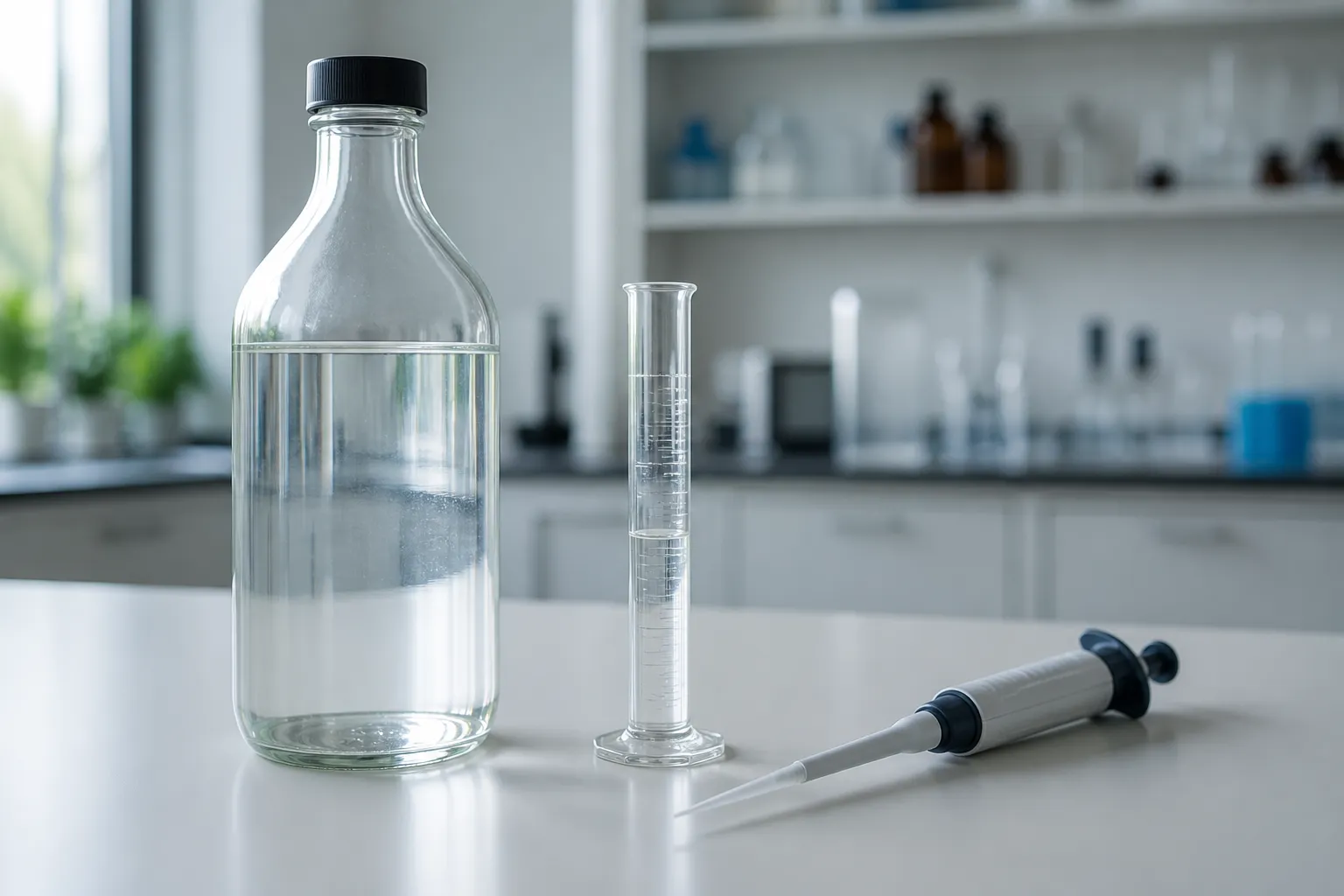
A milliliter measures volume: the three-dimensional space occupied by a substance or object.
Although mL is most often associated with liquids, volume can apply to:
- liquids, such as water or medicine;
- solids, including small objects or measured powders;
- gases held inside a container;
- internal spaces or container capacity.
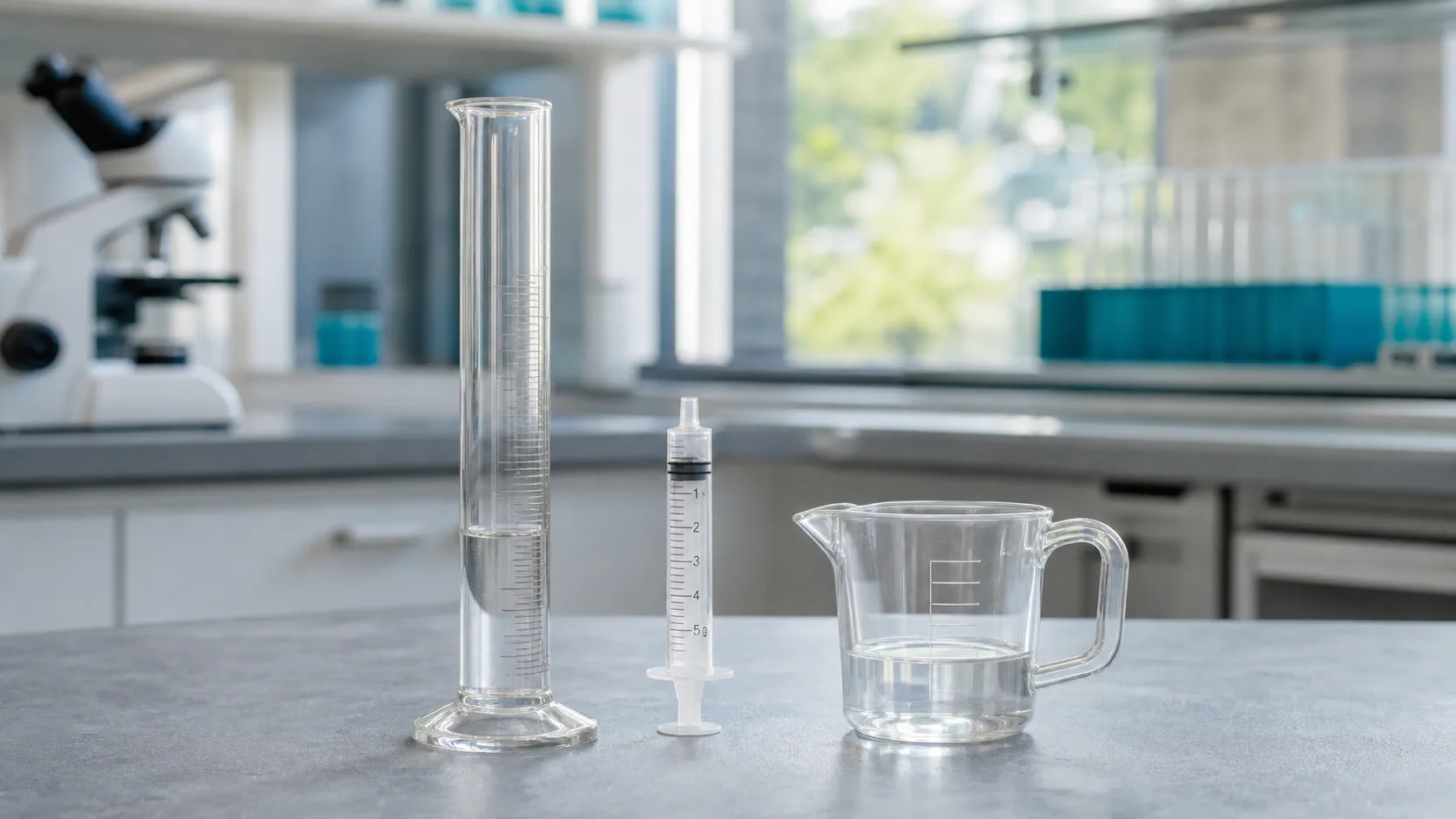
A graduated cylinder may hold 25 mL of liquid, while a small solid object can displace a measurable number of milliliters when placed in water. In both cases, the unit describes space rather than mass.
Volume and capacity are related but not identical
Volume describes the space occupied by something. Capacity describes how much a container can hold.
A bottle may have a stated capacity of 500 mL. If it currently contains only 200 mL, its capacity remains 500 mL, while the liquid volume inside it is 200 mL.
Manufacturers use mL for both product quantity and container capacity, so the surrounding label determines which meaning applies.
How Much Is One Milliliter?
One milliliter is a small amount of volume. It is equal to a cube measuring one centimeter on each side:
1 cm × 1 cm × 1 cm = 1 cm³ = 1 mL
The following table summarizes its main equivalents:
| Measurement | Equivalent to 1 mL |
|---|---|
| Liters | 0.001 L |
| Cubic centimeters | 1 cm³ |
| cc | 1 cc |
| Microliters | 1,000 µL |
| Milligrams | No fixed equivalent without density or concentration |
| Grams | No fixed equivalent without density |
It is tempting to imagine one milliliter as one drop, but drop size is not fixed. It can change with the liquid, dropper opening, surface tension, temperature, and technique. A drop should not replace a measured mL value unless the product provides a specific calibrated drop instruction.
Converting mL to Other Metric Volumes
Most metric-volume conversions use multiplication or division by 1,000.
Milliliters to liters
Divide the mL value by 1,000:
Liters = Milliliters ÷ 1,000
Example:
500 mL ÷ 1,000 = 0.5 L
Another example:
250 mL ÷ 1,000 = 0.25 L
Liters to milliliters
Multiply the liter value by 1,000:
Milliliters = Liters × 1,000
Example:
2.5 L × 1,000 = 2,500 mL
Milliliters to microliters
Multiply mL by 1,000:
Microliters = Milliliters × 1,000
Example:
1.5 mL × 1,000 = 1,500 µL
Microliters to milliliters
Divide the microliter value by 1,000:
Milliliters = Microliters ÷ 1,000
For example:
750 µL ÷ 1,000 = 0.75 mL
Milliliters to cubic centimeters
No calculation is needed because the units represent equal volumes:
5 mL = 5 cm³ = 5 cc
The equality between mL and cc is exact, not an approximation.
mL in Medicine and Prescription Instructions
On a medicine label, mL identifies a liquid volume. It does not by itself reveal the amount of active ingredient in that liquid.
A direction stating “measure 5 mL” specifies the volume to place in an appropriate measuring device. A strength written as 100 mg/5 mL provides two different pieces of information:
- 100 mg is the mass of the named active ingredient.
- 5 mL is the volume containing that amount.
- The concentration is 20 mg/mL.
This relationship does not mean that 100 mg and 5 mL are equivalent units. Another formulation could contain a different number of milligrams in the same 5 mL volume.
Always verify the correct product, concentration, prescribed amount, and measuring device. This information should not be used to select or change a medicine dose.
Why medicine is measured in mL
Liquid medicines need a consistent volume unit. Milliliters provide a standardized measurement that does not depend on the varying sizes of household spoons.
For suitable oral liquids, a calibrated oral syringe can be more accurate than a kitchen spoon, especially for small volumes. Medicine cups may work for larger quantities but often have fewer graduation marks.
Household teaspoons and tablespoons should not be used for medication measurement. Their actual capacity can vary, and liquid may spill or remain on the spoon.
How to Read mL on an Oral Syringe
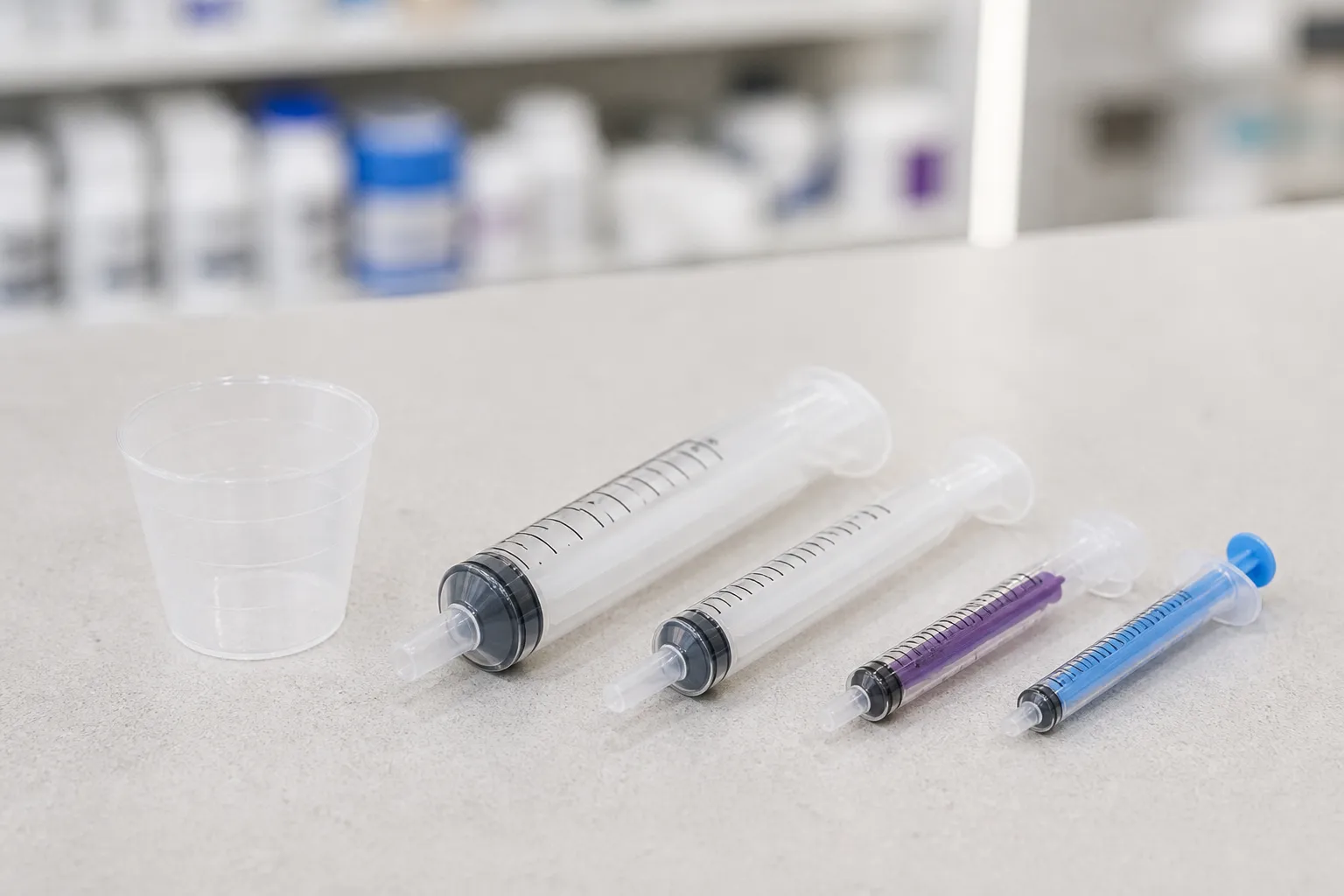
Oral syringes come in different sizes, such as 1 mL, 3 mL, 5 mL, or larger. Their graduation marks are not automatically identical.
Before measuring:
- Read the syringe’s maximum capacity.
- Identify the numbered lines.
- Determine the value of each smaller graduation.
- Use the part of the plunger specified by the device instructions.
- Hold the syringe where the scale can be viewed clearly.
- Remove large air gaps unless the product instructions state otherwise.
- Recheck the decimal point before use.
A smaller syringe may provide finer markings for a small volume than a large syringe. However, the most suitable device depends on the intended volume and its required accuracy.
Syringe units are not automatically milliliters
Some syringes use “units” instead of, or alongside, mL. A unit marking may be based on a specific product concentration or syringe system. It should not be converted to mL without identifying the exact syringe and product.
Do not assume that one syringe unit equals 0.01 mL, 0.1 mL, or any other fixed amount across all devices.
Reading a Graduated Cylinder Correctly
Laboratories often use graduated cylinders when they need to measure liquid volume more accurately than a general measuring cup.
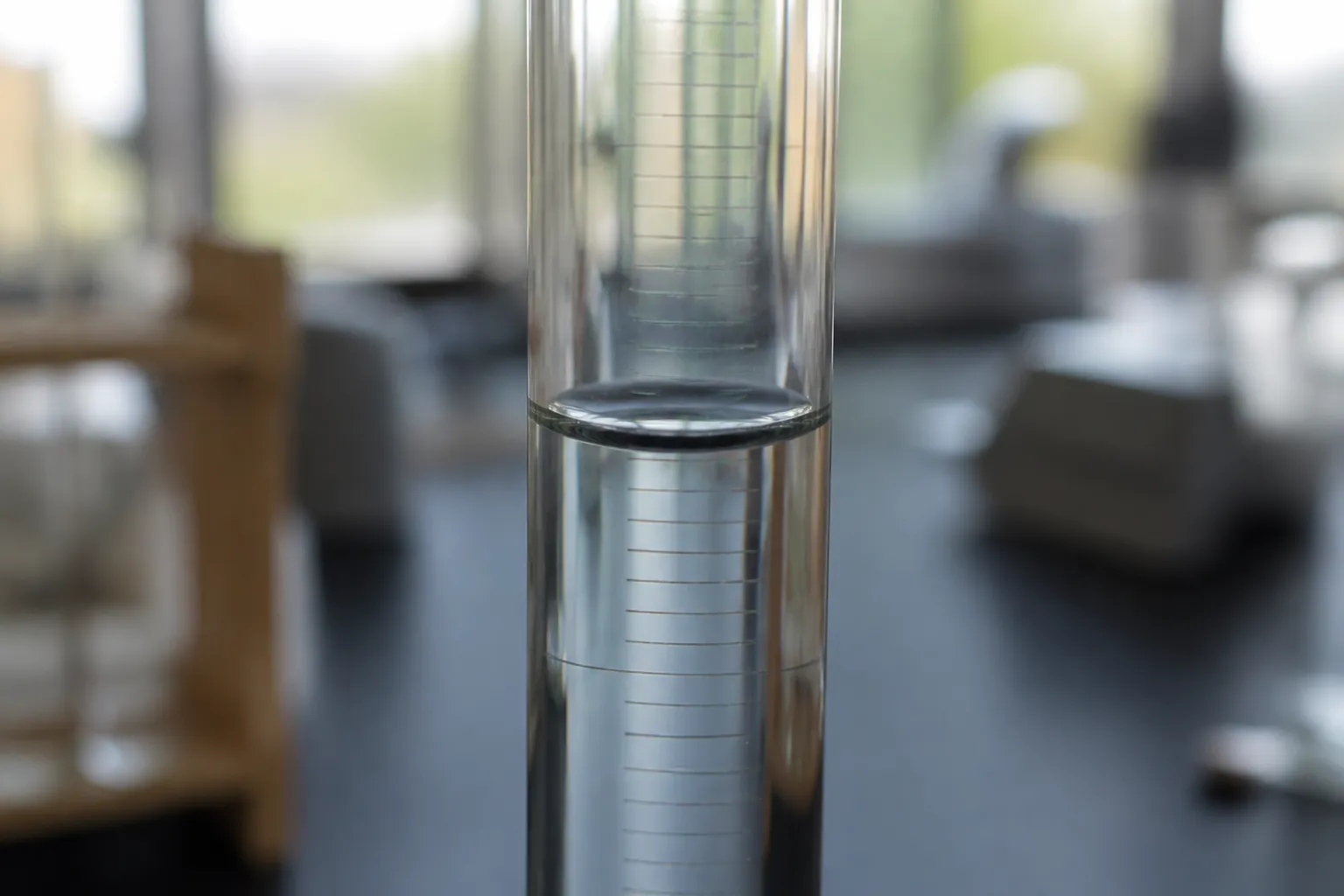
Many clear liquids form a concave meniscus—a curved surface that is lower in the center. For such liquids, read the bottom of the meniscus while your eyes are level with the liquid.
Looking from above or below can create a parallax error, making the volume appear higher or lower than it is. The cylinder should stand upright on a level surface.
Not every liquid forms the same type of meniscus. Opaque liquids and liquids with a convex surface may require a different reading method. Follow the equipment and substance instructions when precision matters.
A pipette or micropipette may be more appropriate for very small quantities, while volumetric glassware may be selected when a specific final volume is required.
Everyday Uses for Milliliters
Cooking
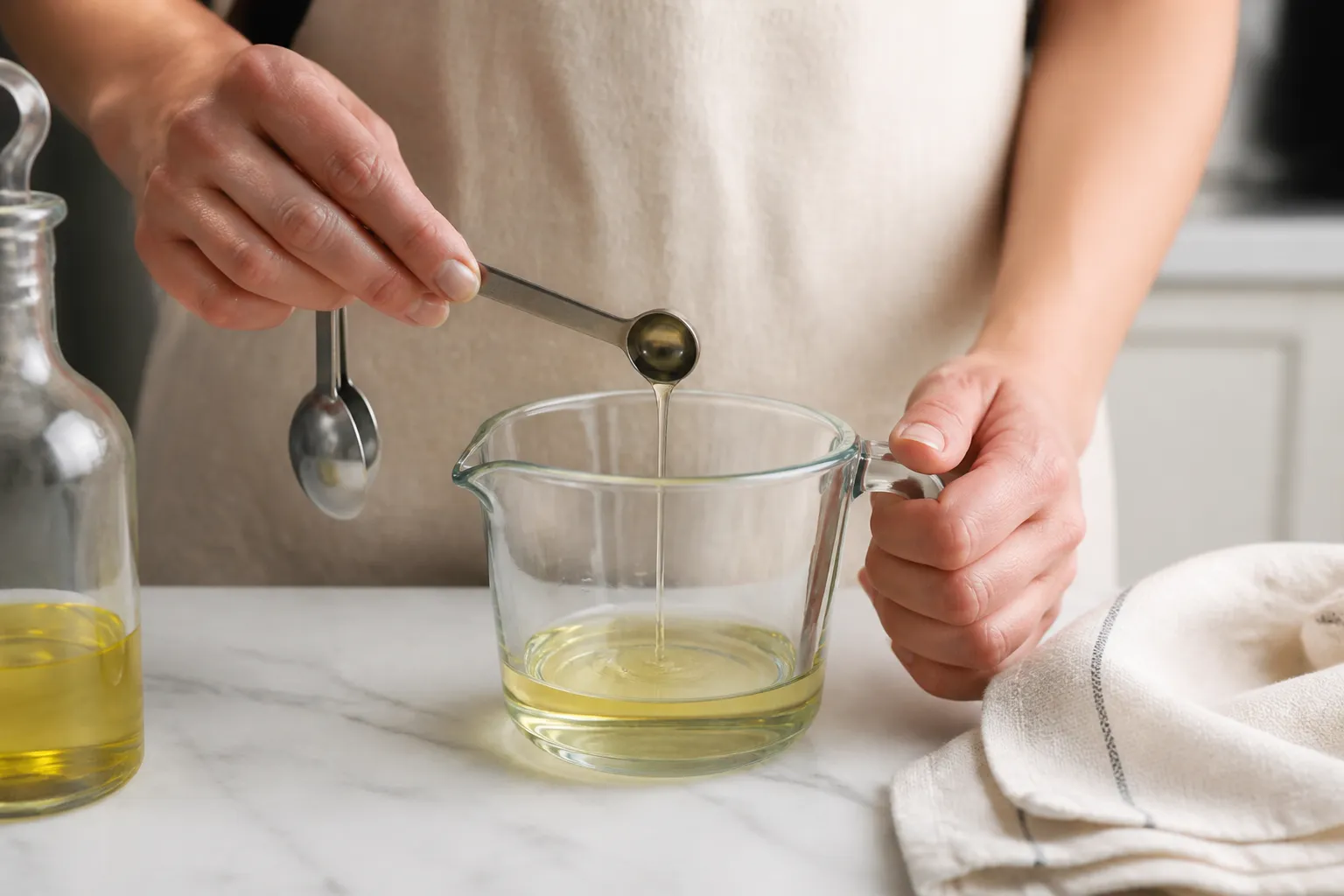
Recipes use mL for water, milk, oil, extracts, and sauces. In metric measurement:
- 5 mL equals one metric teaspoon.
- 15 mL equals one metric tablespoon.
Cooking spoon standards can vary by country, and household cutlery is not a calibrated measuring tool. A metric spoon set or liquid measuring device gives a more dependable result.
A US fluid ounce is approximately 29.57 mL, while a US customary cup is approximately 236.59 mL. Recipe conversions should identify whether the source uses US, Imperial, or metric measurements.
Laboratories
Laboratories use mL for samples, reagents, prepared solutions, and final volumes. The instrument is chosen according to the required precision. A beaker may provide only an estimate, while a graduated cylinder, pipette, or volumetric flask may offer greater accuracy for a suitable task.
Cosmetics and personal-care products
Perfumes, creams, serums, shampoos, and lotions often display their contents in mL. The number normally represents the product volume rather than the container’s outside dimensions.
Beverages and packaging
Drink bottles, cans, travel containers, and sample packages commonly show capacity or net contents in mL. A 330 mL beverage container holds roughly one-third of a liter.
mL vs mg, g, cc, µL, and mm
Similar symbols can describe entirely different measurements.
mL vs mg
mL measures volume; mg measures mass. A conversion requires density for a complete substance or concentration for an ingredient in a solution.
mL vs g
A gram measures mass. One mL does not always equal one gram. For water, 1 mL has a mass of approximately 1 g under ordinary conditions, but other substances have different densities.
mL vs cc
One mL equals one cc exactly. Both represent the same volume, although mL is generally clearer for liquid measurement.
mL vs µL
A microliter is one-thousandth of a milliliter:
1 mL = 1,000 µL
mL vs L
A liter is 1,000 times larger than a milliliter:
1 L = 1,000 mL
mL vs mm
A millimeter, written mm, measures length. A milliliter measures volume. They cannot be converted directly because they describe different physical quantities.
Why mL Cannot Be Converted Directly to mg or Grams
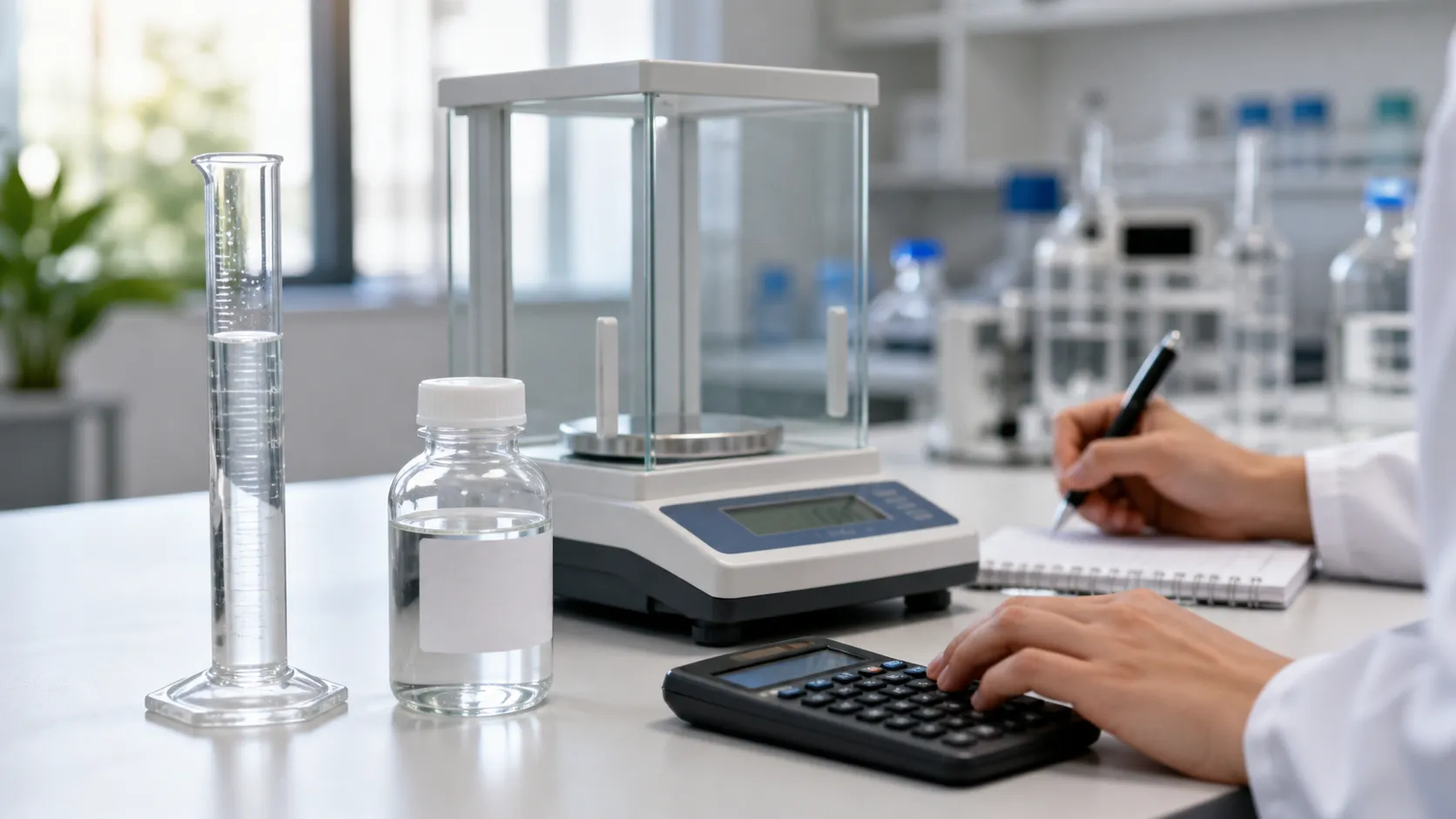
Volume alone does not reveal mass. You must know the material’s density:
Mass = Volume × Density
For an ingredient dissolved in a solution, you need concentration:
Ingredient amount = Volume × Concentration
Water is often used as an example because 1 mL has a mass close to 1 g, or 1,000 mg, under ordinary conditions. This is a water-specific approximation, not a universal conversion rule.
Oil, syrup, alcohol, and other liquids can have different masses per milliliter. Likewise, 1 mL of one medicine may contain a different active-ingredient mass from 1 mL of another concentration.
Decimal and Measurement Safety
Decimal placement matters when working with small volumes:
- 0.01 mL is one-tenth of 0.1 mL.
- 0.1 mL is one-tenth of 1 mL.
- 0.5 mL is five times 0.1 mL.
- 5 mL is ten times 0.5 mL.
Use a leading zero for values below one: write 0.5 mL, not .5 mL. Avoid adding an unnecessary trailing zero in medication notation because 1.0 mL could be misread as 10 mL if the decimal is overlooked.
The displayed decimal places should also match the measuring device. A cup marked only in whole milliliters cannot reliably measure hundredths of a milliliter.
Frequently Asked Questions
What does mL stand for?
mL stands for milliliter, a metric unit of volume equal to one-thousandth of a liter. The lowercase m represents milli, while the capital L represents liter.
Should mL have a capital L?
Yes. The recommended form is mL. The capital L is easier to distinguish from the numeral 1, while the lowercase m correctly represents the metric prefix milli.
How many mL are in one liter?
One liter contains exactly 1,000 mL. To convert liters to milliliters, multiply by 1,000. To convert milliliters to liters, divide by 1,000.
Is 1 mL equal to 1 cc?
Yes. One milliliter equals exactly one cubic centimeter or one cc. Both describe the same volume, although mL is generally preferred for liquid measurements.
Does 1 mL equal 1 gram?
Not universally. One mL of water has a mass of approximately 1 g under ordinary conditions, but other substances can be lighter or denser. The conversion requires the substance’s density.
Is mL the same as mg?
No. mL measures volume, while mg measures mass. They can be connected only when density or a solution’s concentration is known.
What does mL mean on medicine?
It identifies the liquid volume to measure. The amount of active ingredient is usually stated separately in mg, often as a concentration such as mg per 5 mL.
How can I measure 1 mL accurately?
Use a calibrated device designed for that volume, such as a suitable oral syringe or laboratory pipette. Check the scale and graduation value before measuring. Do not estimate medicine volume with an ordinary household spoon.
Remember the Correct Symbol and Measurement
The answer to what is ML is that the intended measurement is usually mL, meaning milliliter. It measures volume and equals 0.001 liter, one cubic centimeter, one cc, or 1,000 microliters.
Use the correct measuring device for the required precision, and keep volume separate from mass. For liquid medicine, read the exact product concentration and follow the label, prescription, or pharmacist’s instructions rather than treating mL, mg, or syringe units as interchangeable.
Convert mg and mL with the value that actually matters.
Use the calculator with your substance density or the exact concentration shown on the product label.

Misbah Shafique
Misbah Shafique creates clear, carefully researched guides about mass, volume, density, concentration, and everyday measurement conversions.