mg to mL Conversion Chart: Water, Density, and Concentration Tables
Use separate mg-to-mL reference tables for water, material density, and liquid concentration, with formulas, worked examples, and checks that prevent unsafe assumptions.
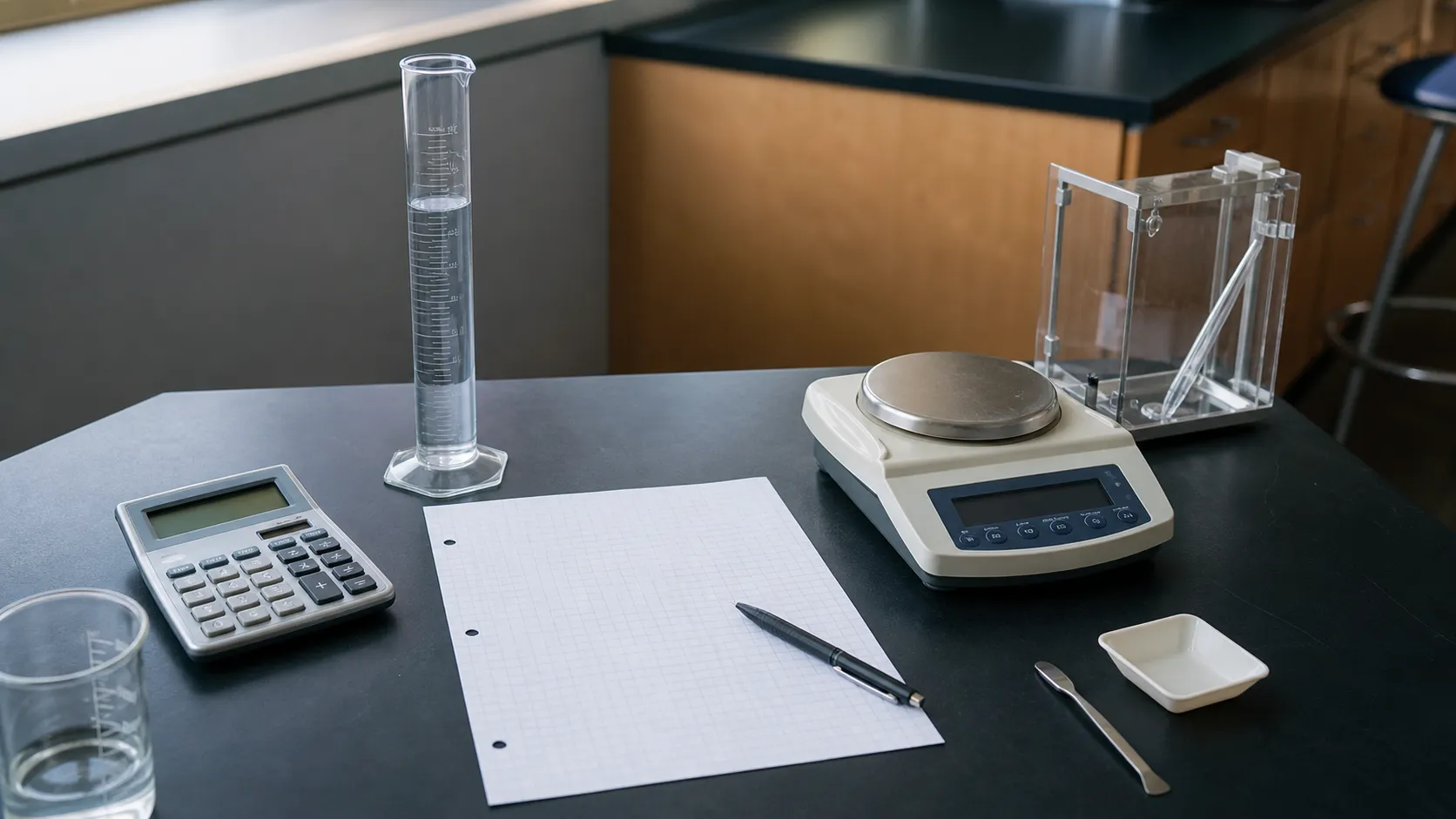
An mg to mL conversion chart is accurate only when it identifies the substance’s density or the solution’s concentration. For water, divide milligrams by 1,000 because water has a density close to 1,000 mg/mL. For liquid medicine, divide the required amount in mg by the concentration printed on the label.
There is no universal chart that converts every milligram value into one fixed number of milliliters. Milligrams measure mass, while milliliters measure volume. The same mass can occupy different volumes in oil, water, syrup, or another material. A medicine adds another distinction: its concentration describes how much active ingredient is contained in each milliliter of the complete liquid. The tables below keep these uses separate so that their values are not mistaken for one another.
Quick Guide to Choosing the Right Chart
Before looking up a value, decide what the milligrams represent:
| What the mg value represents | Information required | Correct table or formula |
|---|---|---|
| Total mass of water | Water density, approximately 1 g/mL | Water conversion chart |
| Total mass of another substance | Substance density in mg/mL or g/mL | Density formula |
| Active ingredient in a solution | Concentration in mg/mL | Concentration chart |
| Ingredient shown as mg per 5 mL | Labeled amount and labeled volume | Label-strength table |
A water chart should not be used for medication, and a medicine concentration table should not be treated as a chart of total liquid mass.
Water mg to mL Conversion Chart
The following table applies only to water or a substance assumed to have a density close to 1 g/mL, equal to approximately 1,000 mg/mL. It is not a general-purpose chart for all liquids.
| Mass of water | Approximate volume |
|---|---|
| 1 mg | 0.001 mL |
| 5 mg | 0.005 mL |
| 10 mg | 0.01 mL |
| 25 mg | 0.025 mL |
| 50 mg | 0.05 mL |
| 100 mg | 0.1 mL |
| 125 mg | 0.125 mL |
| 250 mg | 0.25 mL |
| 500 mg | 0.5 mL |
| 750 mg | 0.75 mL |
| 1,000 mg | 1 mL |
The calculation behind every row is:
Volume of water (mL) = Mass (mg) ÷ 1,000 mg/mL
For example:
250 mg ÷ 1,000 mg/mL = 0.25 mL
The units also verify the operation:
mg ÷ (mg/mL) = mg × (mL/mg) = mL
The mg units cancel, leaving the required unit of volume.
How many mL is 1,000 mg of water?
At the assumed density of 1 g/mL:
1,000 mg of water ≈ 1 mL
Water density changes slightly with temperature. For everyday educational estimates, the rounded value is usually sufficient. Laboratory work may require a temperature-specific density and more appropriate significant figures.
Why One Chart Cannot Cover Every Substance
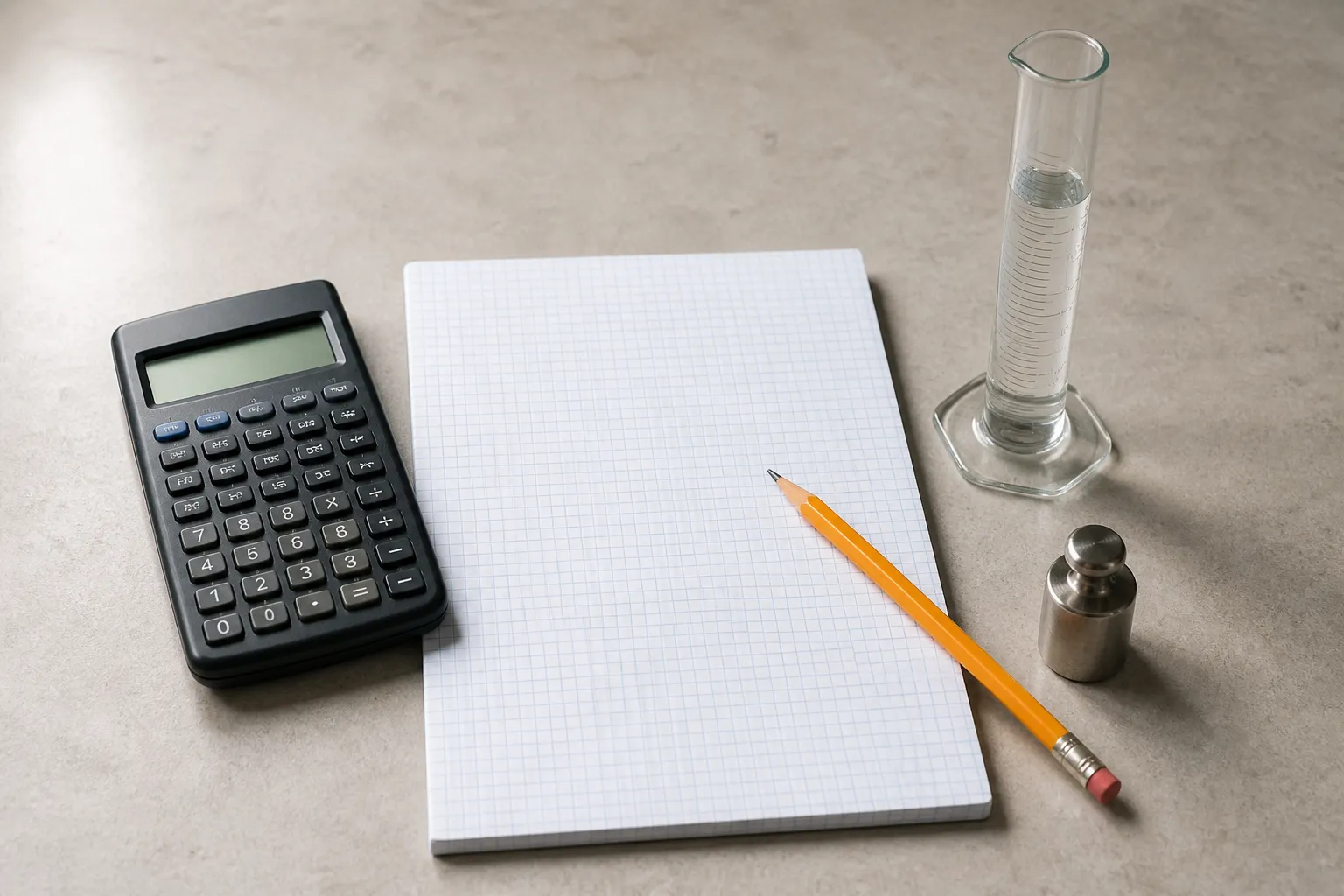
A milligram measures mass, but a milliliter measures volume. Density is the value that connects the two.
Imagine 500 mg of two different liquids. If the first liquid is relatively dense, its particles pack more mass into each milliliter, so 500 mg occupies less space. If the second is less dense, the same mass requires more volume.
That relationship is expressed as:
Density = Mass ÷ Volume
Rearrange it to calculate volume:
Volume = Mass ÷ Density
For this reason, an unlabeled milligrams-to-milliliters chart is incomplete. Every valid table must state one of the following:
- the substance and its assumed density;
- a custom density used for all calculations; or
- the concentration of a particular ingredient in a solution.
Composition also matters. Two products that share a general name, such as cooking oil or syrup, may have different formulations and densities. Temperature can create a further difference. Use a manufacturer’s product specification, safety data sheet, or suitable density reference when accuracy matters.
How to Convert mg to mL Using Density
If density is already given in mg/mL, use:
Volume (mL) = Mass (mg) ÷ Density (mg/mL)
Suppose 600 mg of a liquid has a density of 750 mg/mL:
600 ÷ 750 = 0.8 mL
When density is listed in g/mL
Density references frequently use grams per milliliter. Convert g/mL to mg/mL by multiplying by 1,000:
Density in mg/mL = Density in g/mL × 1,000
For a liquid with a density of 0.8 g/mL:
0.8 × 1,000 = 800 mg/mL
Now convert 500 mg:
500 mg ÷ 800 mg/mL = 0.625 mL
The same calculation can be written as one formula:
Volume (mL) = Mass (mg) ÷ [Density (g/mL) × 1,000]
Substituting the values:
500 ÷ (0.8 × 1,000) = 0.625 mL
This mg to mL conversion table with density can be created for any material once a reliable density value has been identified.
Conversion Chart by Liquid Concentration
The next table has a different purpose from the water table. It shows the volume of a solution needed to contain a stated mass of an ingredient at four example concentrations.
These are arithmetic reference values, not dosing recommendations. For medication use, the concentration must come from the exact product label, and the required amount must come from valid instructions.
| Required amount | At 5 mg/mL | At 10 mg/mL | At 25 mg/mL | At 50 mg/mL |
|---|---|---|---|---|
| 1 mg | 0.2 mL | 0.1 mL | 0.04 mL | 0.02 mL |
| 5 mg | 1 mL | 0.5 mL | 0.2 mL | 0.1 mL |
| 10 mg | 2 mL | 1 mL | 0.4 mL | 0.2 mL |
| 25 mg | 5 mL | 2.5 mL | 1 mL | 0.5 mL |
| 50 mg | 10 mL | 5 mL | 2 mL | 1 mL |
| 100 mg | 20 mL | 10 mL | 4 mL | 2 mL |
| 250 mg | 50 mL | 25 mL | 10 mL | 5 mL |
| 500 mg | 100 mL | 50 mL | 20 mL | 10 mL |
The formula is:
Volume required (mL) = Required amount (mg) ÷ Concentration (mg/mL)
For example, a required amount of 100 mg at an identified concentration of 50 mg/mL produces:
100 mg ÷ 50 mg/mL = 2 mL
At 25 mg/mL, the same 100 mg amount occupies:
100 mg ÷ 25 mg/mL = 4 mL
The mg amount has not changed. The mL result changes because the second liquid contains fewer milligrams in each milliliter.
Converting Labels Written as mg per 5 mL
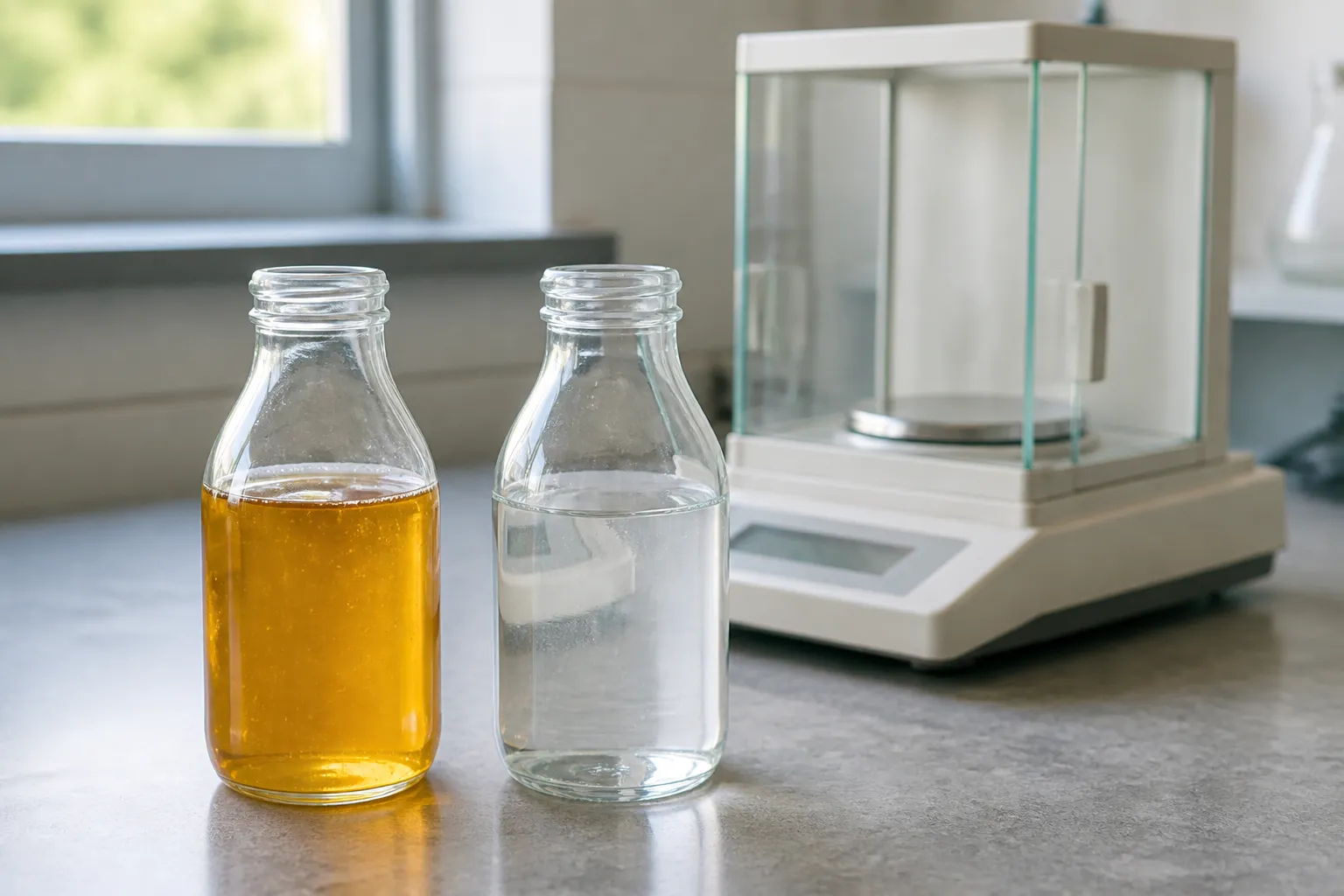
Liquid medications and supplements are often labeled as an amount per 5 mL rather than per 1 mL. Divide the labeled milligrams by the labeled volume to find the concentration.
Concentration (mg/mL) = Labeled amount (mg) ÷ Labeled volume (mL)
| Label strength | Equivalent concentration |
|---|---|
| 25 mg/5 mL | 5 mg/mL |
| 50 mg/5 mL | 10 mg/mL |
| 125 mg/5 mL | 25 mg/mL |
| 250 mg/5 mL | 50 mg/mL |
| 500 mg/5 mL | 100 mg/mL |
A label stating 250 mg/5 mL means each 5 mL contains 250 mg of the named active ingredient. Dividing both values by five gives 50 mg/mL.
If a valid instruction requires 125 mg, the corresponding volume is:
125 mg ÷ 50 mg/mL = 2.5 mL
The label values can also be used directly:
Volume required = Required amount ÷ Labeled amount × Labeled volume
125 mg ÷ 250 mg × 5 mL = 2.5 mL
This method is sometimes written as D/H × Q, meaning desired amount divided by amount on hand, multiplied by the supplied quantity.
How to Read an mg to mL Conversion Chart Correctly
A chart is useful only if its assumptions match your situation. Use this sequence before selecting a value:
- Identify what the mg number describes. Is it the total mass of a material or one ingredient in a solution?
- Read the chart heading. Look for a named substance, density, or concentration.
- Match the units. Confirm that both the required amount and supplied amount are in mg.
- Select the correct row. Find the required mass without moving to a nearby value.
- Select the correct column. For a concentration chart, use the precise mg/mL strength.
- Check the intersection. Verify the result using the formula when accuracy matters.
- Assess measurability. Make sure the calculated volume can be measured accurately with the available device.
Do not estimate between medication columns when the actual concentration is not shown. Read the product label instead.
Using the Chart for Liquid Medicine
A medicine mg to mL chart can check arithmetic, but it cannot choose a dose, product, concentration, or measuring method for the reader. Before using any medication mg-to-mL conversion, confirm:
- the correct person and medication;
- the exact formulation and concentration;
- the prescribed or otherwise authorized amount;
- the route of administration;
- the current product label;
- the suitability and markings of the measuring device.
For appropriate oral liquids, a calibrated oral syringe often provides clearer measurement than a household spoon. Choose a device that can measure the calculated volume at the required precision. A medicine cup may be suitable for larger volumes but may not provide enough detail for small measurements.
Very small results require extra caution
Some cells in a concentration conversion chart contain values such as 0.02 mL or 0.04 mL. These amounts may be below the reliable measurement range of common oral syringes or household devices.
For perspective:
- 1 mL = 1,000 µL
- 0.1 mL = 100 µL
- 0.02 mL = 20 µL
Laboratories may use a calibrated micropipette for microliter-scale volumes. That does not mean a household or medical user should substitute laboratory equipment or change a formulation. If instructions produce a volume that cannot be measured reliably, confirm the product, concentration, and directions with a pharmacist or prescribing clinician.
Reconstituted Products Need the Verified Final Concentration
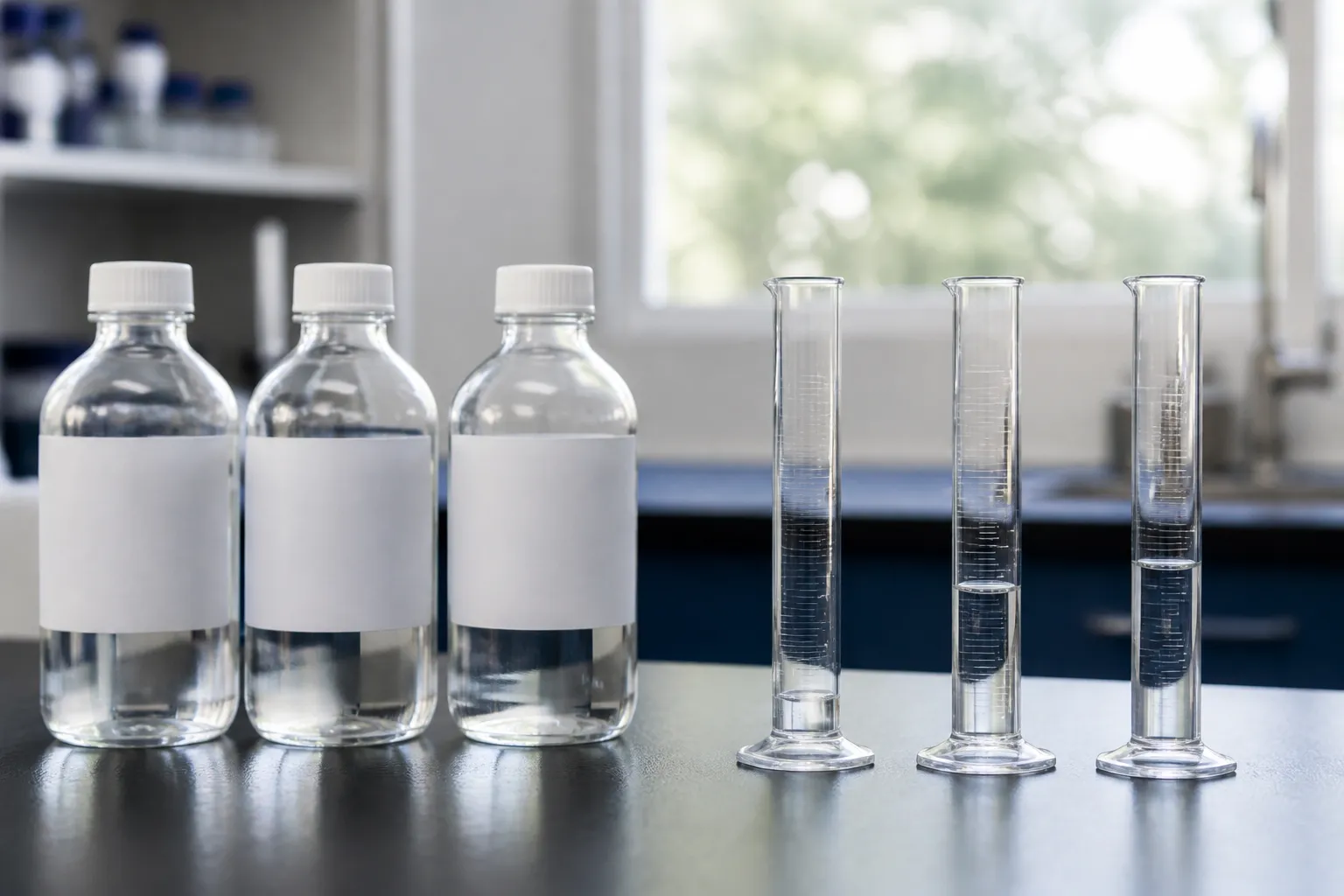
Some medicines are supplied as powder and become liquid after reconstitution. The resulting concentration must come from the approved label or preparation instructions.
The final volume may not always equal the amount of liquid added. Powder can occupy space, and the manufacturer’s directions may specify a final concentration rather than a simple sum of powder and diluent volumes.
Therefore:
- do not assume that added liquid equals final volume;
- do not invent a concentration from the container size;
- do not use a generic liquid medicine conversion chart as reconstitution guidance;
- verify that the product was prepared correctly before calculating a volume.
An arithmetic chart can interpret a verified concentration, but it cannot determine the correct diluent, preparation method, storage conditions, compatibility, or stability.
Decimal and Measurement Checks
A chart prevents repeated arithmetic only when its values are read correctly. Decimal-point errors can change an amount tenfold or hundredfold:
- 0.02 mL is one-fifth of 0.1 mL.
- 0.1 mL is one-tenth of 1 mL.
- 0.5 mL is five times 0.1 mL.
- 5 mL is ten times 0.5 mL.
Always use a leading zero for values below one: write 0.5 mL, not .5 mL. Avoid unnecessary trailing zeros in medication notation because a value such as 1.0 may be misread as 10 if the decimal point is missed.
Do not round during the early stages of a calculation. Keep the available precision, complete the formula, and then apply an appropriate rounding rule based on the intended use and measuring device.
Reverse Conversion: mL to mg
Sometimes you know the liquid volume and want to determine how many milligrams it contains.
For a substance with known density:
Mass (mg) = Volume (mL) × Density (mg/mL)
For an ingredient at a known concentration:
Amount (mg) = Volume (mL) × Concentration (mg/mL)
If 2.5 mL of a solution has a concentration of 40 mg/mL:
2.5 mL × 40 mg/mL = 100 mg
The mL units cancel, leaving mg.
As with the forward conversion, the answer depends on the density or concentration. A volume alone does not reveal the mass of a complete material or the amount of active ingredient.
Frequent Chart-Reading Errors
Using the water column for another substance
The water table assumes approximately 1,000 mg/mL. Oils, alcohols, syrups, chemicals, and formulated products can have different densities.
Treating concentration as total liquid density
A concentration of 50 mg/mL means each milliliter contains 50 mg of a stated ingredient. It does not mean the entire milliliter has a total mass of 50 mg.
Ignoring the “per 5 mL” part of a label
A strength of 250 mg/5 mL is equivalent to 50 mg/mL, not 250 mg/mL.
Selecting a concentration because it is convenient
Use the concentration on the exact product. The chart’s example columns do not prove that a product is available or suitable at those strengths.
Assuming a chart replaces professional instructions
A reference chart can confirm arithmetic. It cannot diagnose a condition, prescribe an amount, identify an appropriate formulation, or resolve unclear directions.
Frequently Asked Questions
Is there a universal mg to mL chart?
No. Milligrams measure mass, while milliliters measure volume. A valid chart must specify the material’s density or a solution’s concentration. A table that gives fixed values without stating either assumption is incomplete.
How many mL is 1,000 mg of water?
Using an approximate water density of 1,000 mg/mL, 1,000 mg of water occupies about 1 mL. This relationship is water-specific and should not be assumed for other liquids or medication ingredients.
How do I convert mg to mL using density?
Divide the mass in mg by density in mg/mL. If density is given in g/mL, multiply it by 1,000 first. For example, 500 mg at 0.8 g/mL equals 500 ÷ 800, or 0.625 mL.
How do I convert mg to mL for medicine?
Use the exact concentration printed on the product label: volume in mL equals the required amount in mg divided by concentration in mg/mL. The calculation does not determine what amount a person should receive.
What does 250 mg per 5 mL mean?
It means that each 5 mL contains 250 mg of the named ingredient. The equivalent concentration is 50 mg/mL because 250 divided by five equals 50.
Can I use the water chart for oil or medicine?
Not reliably. Oil may have a different density, and medication calculations use active-ingredient concentration rather than water density. Use the appropriate substance density or the concentration printed on the exact medicine label.
How do I convert mL back to mg?
Multiply volume in mL by density in mg/mL for a complete substance, or by concentration in mg/mL for an ingredient in solution. Without one of these values, a reliable conversion is not possible.
Can an oral syringe measure 0.02 mL accurately?
Many common oral syringes cannot measure 0.02 mL reliably. Device markings and accuracy vary. If a calculation produces such a small volume, verify the product concentration and instructions with a pharmacist or prescribing clinician rather than estimating.
Use the Table That Matches the Measurement
The right mg to mL conversion chart depends on the question being answered. Use a density-based table when converting the total mass of a material. Use a concentration-based table when finding the volume that contains a stated amount of one ingredient.
Check every table heading, keep the units consistent, and verify important values with the formula. For liquid medicine, the product label and authorized instructions take priority over a generic reference chart.
Convert mg and mL with the value that actually matters.
Use the calculator with your substance density or the exact concentration shown on the product label.

Misbah Shafique
Misbah Shafique creates clear, carefully researched guides about mass, volume, density, concentration, and everyday measurement conversions.