How Many Milliliters Are in a Milligram? Density and Concentration Explained
Find how many milliliters correspond to a milligram by using the correct density or concentration, with examples for water, liquids, percentages, and medicine labels.
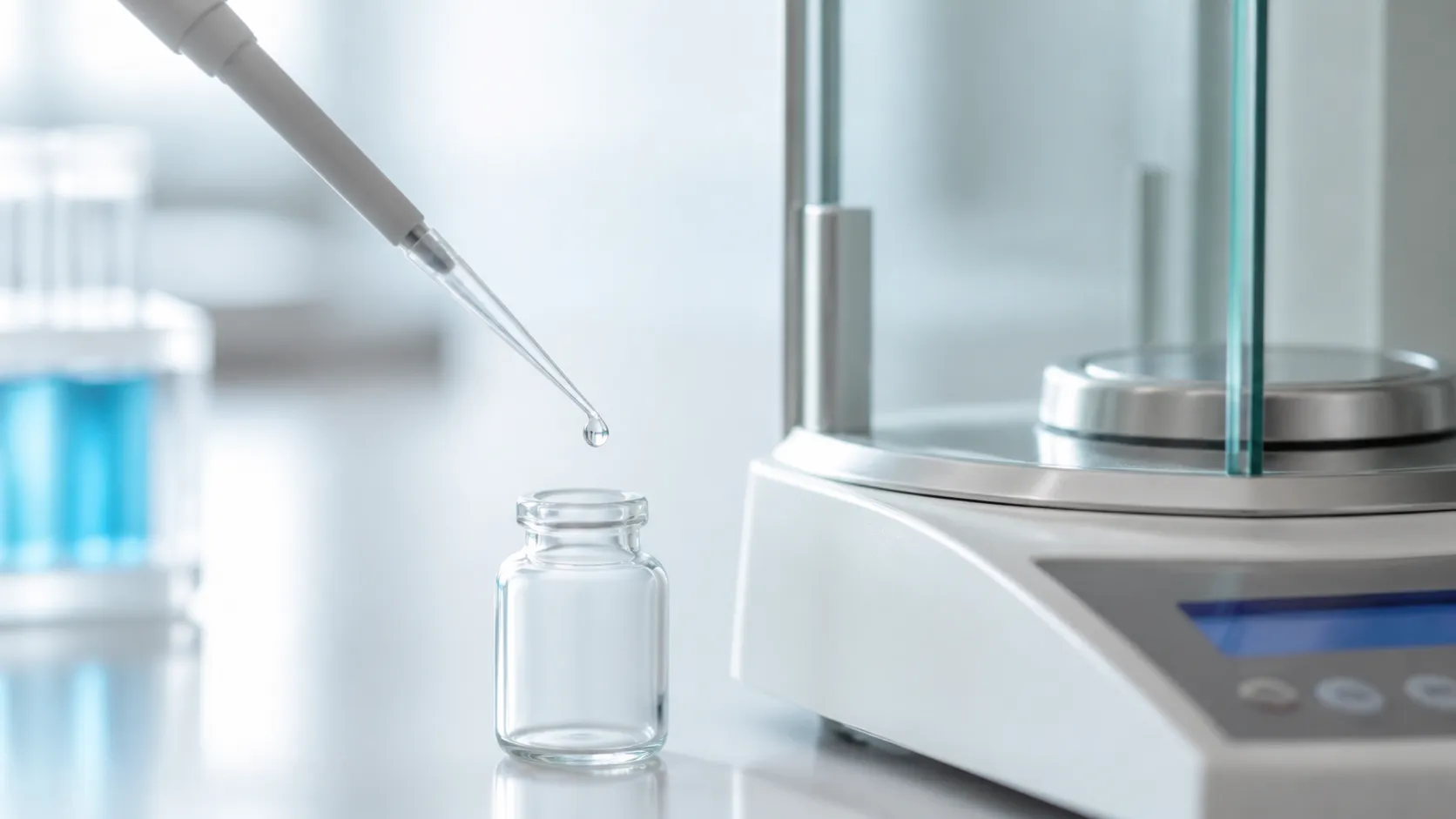
If you are asking how many milliliters are in a milligram, there is no single conversion that works for every substance. A milligram measures mass, while a milliliter measures volume. You need the material’s density—or a liquid medicine’s concentration—to connect the two units.
For water, 1 mg occupies approximately 0.001 mL because water has a density close to 1 g/mL. Oil, syrup, chemicals, and medications may give completely different results. This distinction matters most with medicine: the number of milliliters must come from the concentration printed on the label, not from water’s density. Once you have the correct density or concentration, the calculation is straightforward.
Quick Answer
There is no fixed number of milliliters in one milligram. For a pure substance, divide its mass in milligrams by its density in mg/mL. For a solution or liquid medicine, divide the required amount in milligrams by its concentration in mg/mL.
For water only:
1 mg of water ≈ 0.001 mL
Why Milligrams and Milliliters Are Not Interchangeable
Milligrams and milliliters describe different physical properties.
A milligram (mg) is a unit of mass. It tells you how much matter an item or substance contains. There are 1,000 milligrams in one gram.
A milliliter (mL) is a unit of volume. It tells you how much space a liquid, solid, or gas occupies. One milliliter equals one cubic centimeter, commonly written as 1 cc.
Because mass and volume are different, 1 mg is not automatically equal to 1 mL. A third value must connect them:
- Use density for a pure material or liquid.
- Use concentration for a solution, medication, or dissolved ingredient.
Consider one milliliter of water and one milliliter of a dense syrup. They occupy the same volume, but the syrup may have more mass. Likewise, 1 mg of a dense substance occupies less space than 1 mg of a lighter substance.
How Many Milliliters Are in a Milligram of Water?
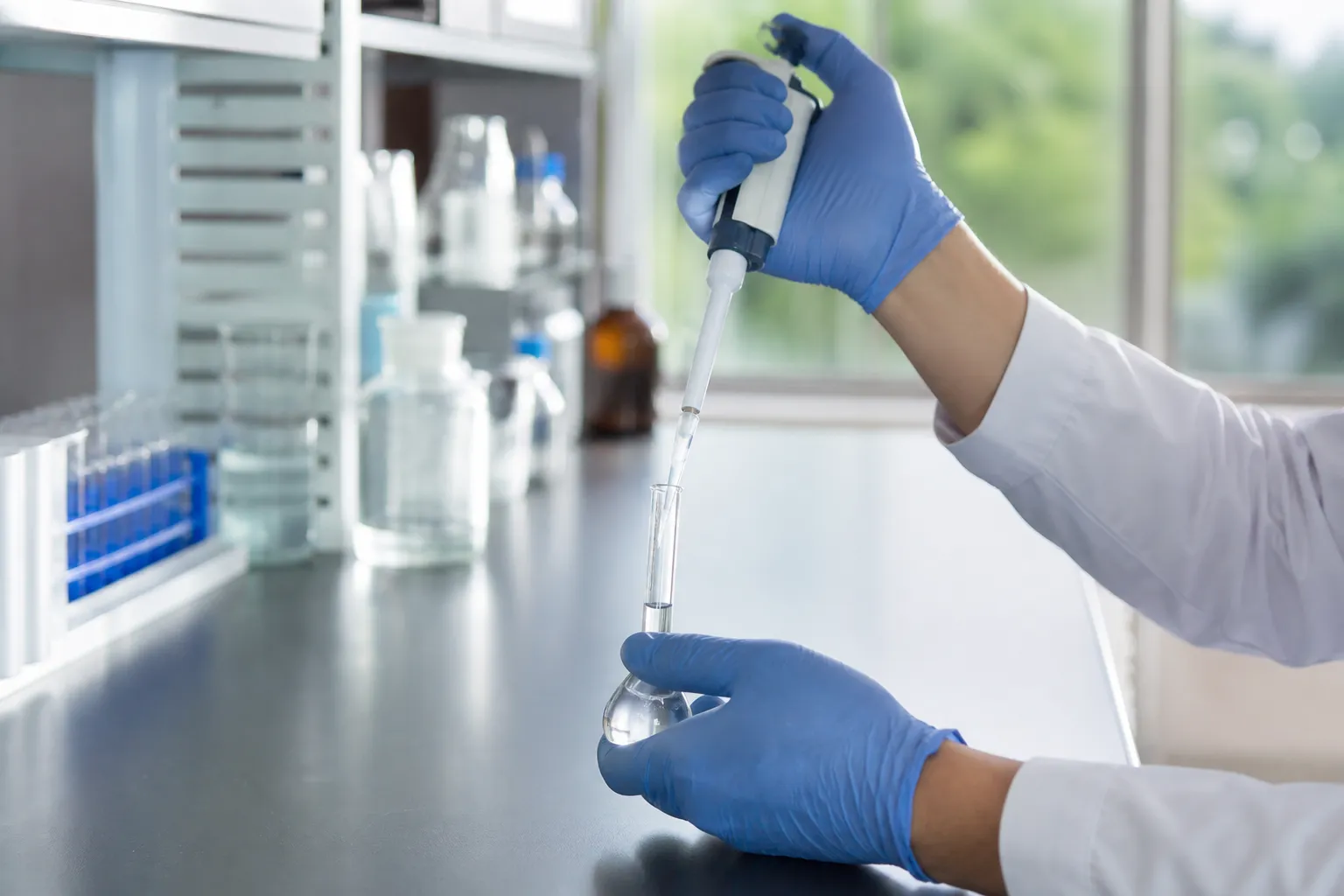
Water provides the familiar 1 mg to 0.001 mL relationship. Under ordinary reference conditions, its density is close to 1 g/mL, which is the same as 1,000 mg/mL.
The calculation is:
Volume = Mass ÷ Density
1 mg ÷ 1,000 mg/mL = 0.001 mL
This also equals 1 microliter because 1 mL contains 1,000 microliters.
Common water approximations include:
- 1 mg of water ≈ 0.001 mL
- 10 mg of water ≈ 0.01 mL
- 100 mg of water ≈ 0.1 mL
- 500 mg of water ≈ 0.5 mL
- 1,000 mg of water ≈ 1 mL
These values should not be applied automatically to oil, alcohol, honey, liquid supplements, or medicine. Water’s density also changes slightly with temperature, although that small difference is often unimportant for ordinary household estimates. Laboratory work may require the density at a specified temperature and greater measurement precision.
Converting Milligrams to Milliliters Using Density
For a mass-to-volume conversion, first find the substance’s density. A product specification sheet, safety data sheet, laboratory reference, or manufacturer may provide it.
When density is expressed in mg/mL, use:
Volume (mL) = Mass (mg) ÷ Density (mg/mL)
Suppose a liquid has a density of 800 mg/mL and you need the volume occupied by 500 mg:
500 mg ÷ 800 mg/mL = 0.625 mL
The milligram units cancel, leaving milliliters.
When density is given in g/mL
Density tables often use grams per milliliter rather than milligrams per milliliter. Since 1 g equals 1,000 mg, convert the density before dividing:
Volume (mL) = Mass (mg) ÷ [Density (g/mL) × 1,000]
For 500 mg of a liquid with a density of 0.8 g/mL:
500 ÷ (0.8 × 1,000) = 0.625 mL
Both methods produce the same result.
How density changes the answer
Imagine two liquids:
- Liquid A has a density of 0.8 g/mL.
- Liquid B has a density of 1.25 g/mL.
For 500 mg:
- Liquid A: 500 ÷ 800 = 0.625 mL
- Liquid B: 500 ÷ 1,250 = 0.4 mL
The denser liquid occupies less volume for the same mass. A less-dense liquid occupies more volume.
Composition and temperature can affect density. Therefore, fixed conversions for foods and household liquids may be unreliable unless the specific product and its density are known.
Density and Concentration Solve Different Problems
Density describes the total mass of a substance per unit of volume. Concentration describes how much of a particular ingredient is contained in a stated volume of a solution.
For example, a medicine labeled 50 mg/mL contains 50 mg of active ingredient in every milliliter of liquid. That does not mean the whole milliliter weighs 50 mg. The liquid also contains water, flavoring, preservatives, or other inactive ingredients.
This difference explains why water density should not be used for a medicine mg-to-mL conversion. With medicine, the question is usually not “What volume does this total mass occupy?” It is “What liquid volume contains the required amount of active ingredient?”
The table below shows how the same mass can correspond to different volumes:
| Mass | Water at approximately 1 g/mL | Solution at 10 mg/mL | Solution at 50 mg/mL |
|---|---|---|---|
| 1 mg | About 0.001 mL | 0.1 mL | 0.02 mL |
| 10 mg | About 0.01 mL | 1 mL | 0.2 mL |
| 50 mg | About 0.05 mL | 5 mL | 1 mL |
| 100 mg | About 0.1 mL | 10 mL | 2 mL |
| 500 mg | About 0.5 mL | 50 mL | 10 mL |
The water column shows the approximate volume occupied by the stated total mass of water. The solution columns show how much liquid contains the stated mass of an active ingredient.
Converting mg to mL for Liquid Medicine
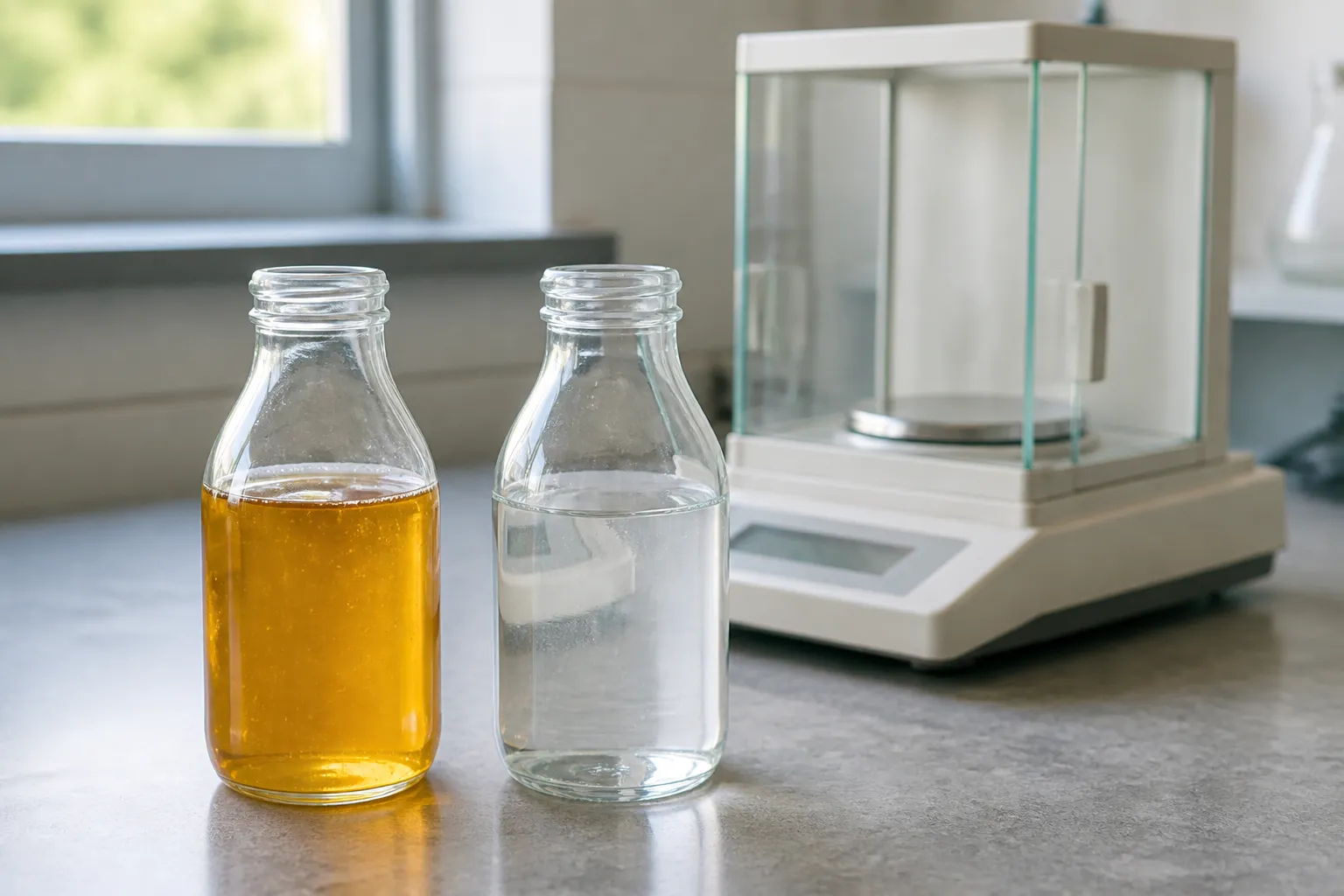
A medicine mg-to-mL calculation must use the exact concentration on the medication label.
If the concentration is already shown in mg/mL, use:
Volume required (mL) = Required amount (mg) ÷ Concentration (mg/mL)
Suppose the required amount stated in valid instructions is 100 mg, and the supplied liquid has a concentration of 50 mg/mL:
100 mg ÷ 50 mg/mL = 2 mL
This calculation determines volume only. It does not determine what dose a person should receive.
Reading labels written as mg per 5 mL
Some labels provide a medication strength such as 250 mg/5 mL rather than mg/mL.
To find the concentration in one milliliter:
250 mg ÷ 5 mL = 50 mg/mL
If the required amount is 100 mg:
100 mg ÷ 50 mg/mL = 2 mL
You can also use the label values directly:
Volume required = Required amount ÷ Labeled amount × Labeled volume
100 mg ÷ 250 mg × 5 mL = 2 mL
Another product might contain 125 mg/5 mL:
125 ÷ 5 = 25 mg/mL
A 100 mg amount at this concentration would require:
100 ÷ 25 = 4 mL
This example shows why a required amount of 100 mg could mean 2 mL of one product but 4 mL of another. Product name, formulation, and concentration must all be checked before measuring.
Medication measurement safeguards
Before completing a liquid dose conversion:
- Verify the correct medicine, formulation, and concentration.
- Confirm that the required amount is written in milligrams.
- Make sure the label strength uses compatible units.
- Calculate the volume without rounding too early.
- Use a calibrated oral syringe or another appropriate device.
- Ask a pharmacist or prescribing clinician about unclear instructions.
Do not estimate a child’s dose from age alone. Pediatric dosing may depend on body weight, diagnosis, formulation, maximum limits, and clinical instructions.
Converting Percentage Strength to mg/mL
Some solutions use percentage strength rather than a direct mg/mL concentration. The following rule applies specifically to percentage weight per volume, written as % w/v.
A 1% w/v solution contains 1 gram in 100 mL.
Convert the gram to milligrams:
1 g = 1,000 mg
Then divide by 100 mL:
1,000 mg ÷ 100 mL = 10 mg/mL
Therefore:
| Percentage strength | Concentration |
|---|---|
| 1% w/v | 10 mg/mL |
| 2% w/v | 20 mg/mL |
| 5% w/v | 50 mg/mL |
For example, 1 mg in a 1% w/v solution occupies:
1 mg ÷ 10 mg/mL = 0.1 mL
Do not apply this rule blindly to % v/v, % w/w, or a product whose percentage basis is unclear. Those notations describe different relationships.
A Reliable mg-to-mL Calculation Process
Follow this sequence whenever you need to convert mg to mL:
- Identify what the milligrams represent. Are they the total mass of a pure substance or the active ingredient in a solution?
- Find the connecting value. Use density for total substance mass or concentration for an ingredient in solution.
- Check the units. Convert g/mL to mg/mL if necessary.
- Choose the correct formula.
- Insert the known values with their units.
- Confirm that the unwanted units cancel.
- Review the decimal and round only as appropriate for the measuring method.
If the substance, density, or concentration is unknown, an accurate milligram-to-milliliter conversion cannot be completed.
Small Volumes, Cubic Centimeters, and Decimal Errors
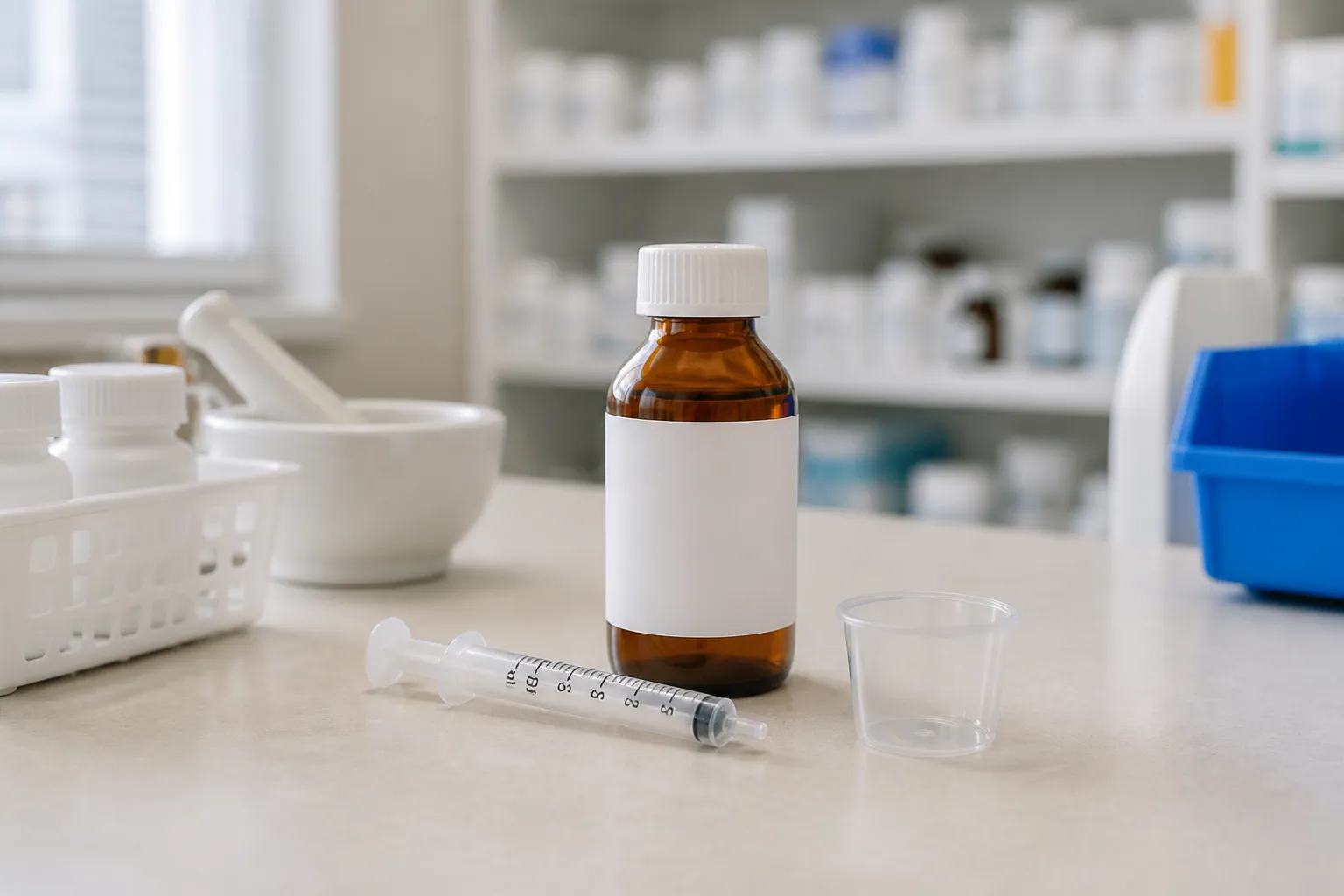
Very small values deserve extra care. One milliliter equals 1,000 microliters, so:
- 0.001 mL = 1 µL
- 0.01 mL = 10 µL
- 0.1 mL = 100 µL
- 1 mL = 1,000 µL
A volume of 0.001 mL may be too small for ordinary household measuring tools. Laboratories use calibrated micropipettes for many microliter-scale measurements. Medication measurement should use a device suitable for the prescribed volume.
Decimal placement changes a result by factors of ten:
- 0.01 mL is not 0.1 mL.
- 0.1 mL is not 1 mL.
- 0.5 mL is ten times 0.05 mL.
Use a leading zero for amounts smaller than one, such as 0.5 mL, so the decimal is visible. In medication notation, avoid unnecessary trailing zeros: write 1 mg rather than 1.0 mg, because a missed decimal could be misread as 10 mg.
One cubic centimeter equals one milliliter as a measure of volume:
1 cc = 1 mL
However, neither 1 cc nor 1 mL equals a fixed number of milligrams. The mass still depends on density or concentration.
Common Conversion Mistakes
Treating 1 mg as 1 mL
This confuses mass with volume. For water, 1 mg is approximately 0.001 mL—not 1 mL.
Assuming every liquid behaves like water
Liquids can have different densities. A water-based estimate is unsuitable when accurate product-specific measurements are required.
Confusing density with medicine strength
A medication’s density describes the total mass of the liquid. Its concentration states how much active ingredient appears in each milliliter. Dose-volume calculations use concentration.
Ignoring the label’s stated volume
A label reading 250 mg/5 mL does not mean 250 mg/mL. Dividing 250 by 5 gives the actual concentration: 50 mg/mL.
Mixing grams and milligrams
If density is given in g/mL while mass is in mg, convert one unit before calculating. One gram contains 1,000 milligrams.
Rounding before the final step
Early rounding can change the result, especially with small quantities. Keep enough digits during the calculation, then round according to the required precision and measuring device.
Frequently Asked Questions
Is 1 mg equal to 1 mL?
No. A milligram measures mass, while a milliliter measures volume. One milligram can be converted to a volume only when the substance’s density or the solution’s concentration is known. For water, 1 mg is approximately 0.001 mL.
Is 1 mg always equal to 0.001 mL?
No. That relationship applies approximately to water and substances with a density near 1 g/mL. A denser material would occupy less than 0.001 mL per milligram, while a less-dense material would occupy more.
How many mL is 1 mg of water?
One milligram of water is approximately 0.001 mL, which is also about 1 microliter. This uses a water density close to 1,000 mg/mL. The exact value can vary slightly with temperature and measurement conditions.
How do I convert mg to mL using density?
Divide the mass in milligrams by density in mg/mL. For example, 400 mg of a substance with a density of 800 mg/mL occupies 0.5 mL. If density is listed in g/mL, multiply it by 1,000 before dividing.
How do I convert mg to mL for medicine?
Divide the required amount in milligrams by the product’s concentration in mg/mL. If the label says 250 mg/5 mL, the concentration is 50 mg/mL. Use only verified instructions and the exact product label; ask a pharmacist if either is unclear.
What does 250 mg per 5 mL mean?
It means every 5 mL of the liquid contains 250 mg of the stated ingredient. Dividing both values by five shows that the concentration is 50 mg/mL. It does not mean that 5 mL of the complete liquid weighs only 250 mg.
Is 1 cc the same as 1 mL?
Yes. One cubic centimeter and one milliliter represent the same volume. They do not represent a fixed mass, however. The number of milligrams in 1 cc depends on the material’s density or the solution’s concentration.
Can I convert mg to mL without density?
Not for a pure substance. You need density to connect mass and volume. For medicine or another solution, concentration may be used instead. Without density, concentration, or enough information to calculate one of them, there is no reliable direct conversion.
Getting the Conversion Right
The answer to how many milliliters are in a milligram depends on what is being measured. Use density when converting the total mass of a material into volume. Use concentration when finding the liquid volume that contains a stated mass of an ingredient.
The water shortcut—1 mg ≈ 0.001 mL—is useful only under the right assumption. For any other material, check its density. For medicine, read the exact concentration, keep the units consistent, measure with a suitable device, and confirm uncertain instructions with a pharmacist.
Convert mg and mL with the value that actually matters.
Use the calculator with your substance density or the exact concentration shown on the product label.

Misbah Shafique
Misbah Shafique creates clear, carefully researched guides about mass, volume, density, concentration, and everyday measurement conversions.